by Kris Oyen | Oct 9, 2023 | Podcast
Podcast: Play in new window | Download
Subscribe to the Recovery Elevator Podcast Apple Podcasts | | More
Episode 451 – What to Say to Someone Who is About to Drink
Today we have Grant. He is 54 from Sacramento, CA and took his last drink on August 10th, 2020.
Exact Nature: https://exactnature.com/RE20
[02:16] Highlights from Paul:
We are five weeks into our Q & A series. This week’s question comes from Sarah C. “What can you say to someone, so they don’t drink?” Or how to help someone not drink.
Paul gives us some tried and true methods that work and strategies that the Recovery Elevator team believe in. Here are a few suggestions that Paul shares with us:
Tough love does not work, so a tone or stance of unconditional love needs to be present when confronting a friend who is about to drink.
Quick note about boundaries. Talking with people that are drunk can be triggering, and little can be done. Ask them to call you in the morning or when they are sober.
Being there with your presence, whether it is in person, via the phone or FaceTime, or Zoom, is the best thing you can do to help them. Holding space provides a safe container for the person to feel the feels, sit front and center with a craving and not feel judged or criticized.
You can also ask them about their “why”. Having them be clear on their “why” again is never a bad idea. You can also remind them that alcohol has been ruined. Drinking while knowing that alcohol no longer has a place in your life isn’t fun.
Better Help: www.betterhelp.com/elevator – 10% off your first month. #sponsored
[10:48]: Paul introduces Grant:
Grant is 54 and lives in Sacramento, CA. He is married and they have two young adult kids. He enjoys hiking and the area he lives in has a lot of nice places he explores. Grant works in research and public policy work in California and now focuses on addiction and recovery.
Grant says his first experience with alcohol was when he was 12. A friend had procured a bottle of brandy and they both ended up drinking to the point of going to the hospital. He drank through junior high and high school with a group of friends on weekends. The drinking continued in college, and he started trying other substances as well. Grant says there weren’t many consequences.
When Grant was in his 30’s after they had children, he found that alcohol helped him take the stress off. He quickly switched from beer to vodka that was easier to hide. He was succeeding at work which stressed him out more than he realized. He says it took some time but eventually he was drinking in the morning just to feel normal.
In 2019 someone from HR confronted Grant about smelling of alcohol and he told them that he was an alcoholic. He couldn’t admit it to his wife initially but started looking for outpatient treatment. He was able to quit for a time but relapsed after a painful experience with work which found him resigning and taking a new job with a pay cut. At this point Grant had joined Café RE and left home for a little while to live in a sober living house. He learned a lot while he was there and realized that he was going to have to do things differently.
After sober living, Grant started a home breathalyzer program to help him stay motivated. A meetup with fellow Café RE members gave Grant another turning point and realized that he was on the right path.
In recovery, Grant started volunteering with a non-profit in the addiction and recovery field. He also started listening to another recovery podcast where he shared information about addiction and recovery. He left to work for the non-profit called Shatterproof which helps people find treatment and recovery with their Treatment Atlas. Grant also has his own website about addiction and recovery – Sober Linings Playbook.
[53:19] Paul closes the episode with a poem from Peter, a Café RE member.
Instagram – We regularly feature content here – often with goats!
Recovery Elevator YouTube
Sobriety Tracker iTunes
Recovery Elevator
It all starts from the inside out.
I love you guys.
by Paul Churchill | Mar 26, 2018 | Podcast
Podcast: Play in new window | Download
Subscribe to the Recovery Elevator Podcast Apple Podcasts | | More
“Your addiction will lie to you in your own voice.”
Your addiction will often appear to you as a voice in your head that sounds like your own rational thoughts. It will tell you that it’s not really that big of a deal, that you are really in control or, in many cases, will conveniently wipe your memory (the ISM or “incredibly short memory”) so you won’t recall what a tough time you had getting through that last hangover.
Be on the lookout for justification phrases such as:
“But I didn’t really have a problem before”
“Everyone else drinks like I do”
“This next time will be different”
“I’ve quit once, I can quit again”
“The only person you’re negatively affecting is yourself”
“I’m cured! I just went [X amount of time] without drinking!”
“Everyone else is having so much fun”
“I got this.”
Stay vigilant in protecting your subconscious mind from thoughts like these and you will have an easier time avoiding relapse. It’s much easier to stay sober than it is to get sober, and staying sober isn’t always easy.
Mike, with almost two years since his last drink, shares his story
SHOW NOTES
[8:05] Paul Introduces Mike.
Sober over 600 days. 37 years old, from California. A professional musician that has worked in California, Boston and around China, as well. He now lives with his girlfriend in Hong Kong. Mike does for the show notes for each podcast episode.
[11:10] You quit drinking and smoking at the same time?
Yes. Smoking was getting in the way of his singing. He read Allen Carr’s “Easy Way To Quit Smoking” and at some point he realized that he wouldn’t be able to quit smoking without quitting drinking. He committed to 30 days. Felt great so he kept going.
[13:58] When did you realize you were going to have to quit drinking also?
When he moved in with his girlfriend. He realized that his actions were having consequences that were affecting other people, and that if he really cared about this person and himself, he would have to clean up his act.
[15:45] What were the indicators that you had a problem with drinking and/or smoking?
He had a therapy session, and the therapist helped him realize that his problem was the drinking, and not what he had thought.
[18:27] At that point, did you attempt to quit or moderate?
Yes. Upon advice from his father, he tried to moderate his drinking by only drinking during work hours. It was a form of torture as his whole day became centered around waiting for work to begin. Eventually it lead to him breaking the rule and drinking all day for weeks.
[20:23] So the willpower technique was torture?
Yes. While the rules were in place he found himself constantly distracted and thinking about drinking. His brain was hijacked by both tobacco and alcohol.
[22:40] How did you get through those difficult cravings after you quit?
He started learning martial arts, and it gave him the tools he had been missing. Previously, he had been using alcohol to relax intense feelings of anxiety or discomfort, but now he was able to use the techniques that he learned at the martial arts classes.
[24:25] Was everyone kung fu fighting?
In Hong Kong, not as much, but globally, yes.. more people are practicing Kung Fu now than ever before.
[26:54] What do you do when the uncomfortable feelings or cravings come?
He focuses on the physical sensations of the craving. He tries to keep his body from becoming static, and thus paralyzed by the craving. He breathes, moves, walks, gets fresh air, whatever is necessary to keep the craving from tensing him up.
[29:19] What is it like to continue working in the nightlife now that you’re sober?
When you’re still drinking, even the thought of trying to quit seems like an insurmountable task, but once you’ve quit and, inevitably, you change the way you see things, the environment in which you were in before is not what it seemed.
[32:30] What’s on your sobriety bucket list going forward?
He’s interested in the physical activities he always turned down while he was drinking and smoking. He wants to travel more and say yes to the things he said no to in the past.
[34:05] What is it like to not have the addiction causing you to feel unsolicited fear?
It’s liberating. There are so many positive experiences to be had in life. Sobriety is an opportunity that begets other opportunities.
[34:53] What is it like to be in recovery in Hong Kong?
He knows someone who has been to AA in Hong Kong but he hasn’t been to any meetings himself, yet. He found solace in online resources, and he considers his online communities to be his recovery community.
[37:10] Rapid Fire Round
- What was your worst memory from drinking?
A really bad hangover in which he could barely function.
- Did you ever have an “oh-shit” moment?
His skype call with the therapist during which she pointed out that his main problem was probably drinking. Before that conversation with her, he had asked his friends about his drinking and they had all reassured him that it was normal. She was the first one to point out that it was probably the cause of his issues.
- What’s your plan moving forward?To continue to set my priorities on health, not overdoing it, to take it a day at a time, never say that “I got this”, to stay vigilant and positive.
- What’s your favorite resource in recovery?The Recovery Elevator podcast, That Sober Guy podcast, Belle’s One Minute Message podcast. The Allen Carr books.
- What’s the best advice you’ve ever received (in sobriety)?
To begin today. If you are suffering, definitely begin today. Don’t be afraid, it’s better on the other side.
- What parting piece of guidance can you give listeners who are in recovery or thinking about quitting drinking?
To begin, to stay focused and to not beat yourself up.
- You might be an alcoholic if…
it’s ever an absolute emergency that you don’t have alcohol, and you find yourself planning accordingly.
Resources mentioned in this episode:
Easy Way To Quit Smoking – A quit aid by Allen Carr.
30 Day No Alcohol Challenge – A quit aid by James Swanick
Standing at the Water’s Edge – A book about creative immersion by Dr. Anne Paris
Connect with Cafe RE– Use the promo code Elevator for your first month free
Sobriety Tracker iTunes
Sobriety Tracker Android
Sober Selfies! – Send your Sober Selfie and your Success Story to info@recoveryelevator.com
“We took the elevator down, we gotta take the stairs back up, we can do this!”
by RE Helper | Apr 15, 2024 | Alcohol Free, Blog, Early Sobriety, The first Year, Uncategorized
Today’s blog entry is from Ana. Ana has been a member of Café RE since April 2023 and is an active and supportive member of her Café RE OG group!
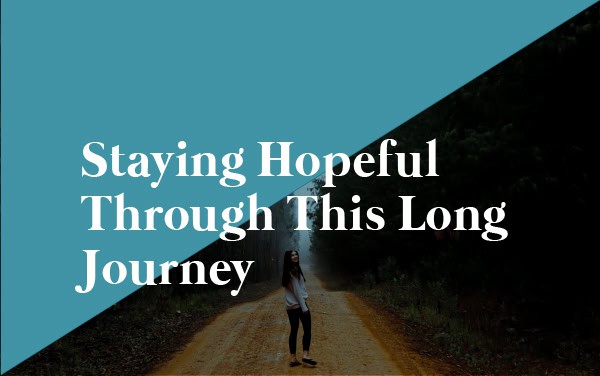
Staying Hopeful Through This Long Journey
By: Ana (Café RE OG)
Around 4 years ago, when I finally admitted I needed to tackle my drinking problem, I truly believed I wouldn’t be able to go a single day without alcohol.
It was scary.
It’s taken a lot of work; programs; books; podcasts; tears; failures; dollars; etc., but I’m pleased to say I’m on a good path to recovery.
Lately I’ve been feeling stuck though.
For the last 2 years or so, I’ve been trapped in the same cycle: I go about 3 months without alcohol. I don’t miss it; I hate it; I gag thinking of the taste. One day I get the nagging idea that I can drink moderately, like I used to.
I don’t want to go back to drinking, even in moderation. I just HAVE to prove to myself that I can, just one final time. I then try, it doesn’t work, and I end up back to square one with a new horrible story under my belt (I’m a binge drinker). It doesn’t make any sense – it’s my brain tricking me into drinking at all costs.
It usually goes like this:
I haven’t drunk in months and I feel great, so I’m CERTAIN it will be different this time. I never go out and order a cocktail or a nice glass of wine though. I buy a pint of the cheapest vodka at the liquor store across the street; rush home; and take around 3 shots asap.
I tell myself it’s sort of the same amount as a martini, therefore I had just a martini, therefore I’m “normal” (nothing wrong with one martini, right?).
Or I’ll buy a single serve can of wine at the market downstairs. I’ll chug it as soon as I walk out of the market; can’t even wait the elevator ride back home.
I tell myself it’s one serving, one generously poured glass; therefore, I had just one glass, therefore I’m “normal”.
Obviously, nothing about this is normal. Most times, I succeed and stop drinking that day. This should be the proof I was looking for, so this should be the end of the story. But I wake up the next day feeling hungover; guilty; and defeated. I go to the market and chug a can of wine by 9 a.m. to numb the crappy feelings.
Sometimes that does me in; sometimes I go a couple more days playing with fire like this.
Eventually I ALWAYS lose control and end up in yet another life-altering, humiliating binge.
This is a cycle I haven’t been able to break yet, and I so want to change that. Today I was at that crossroads. On Wednesday night I had my 3 shots of nasty Skol vodka (my “martini”). Thursday morning I felt wretched, so I eventually caved and had chugged a can of wine by lunch time. I miraculously didn’t drink on Friday. On Saturday though, the nagging discomfort was unbearable. I had some vodka in the afternoon.
My boyfriend was picking me up at 6 to go to a party. The risk of him finding out I’d been drinking and ruining the evening and further damaging our relationship didn’t stop me from having a can of wine dangerously close to 6. I felt miserable at the party, trying to act normal and not get caught. I just wanted to come home so I could have another can of wine before bed. To my annoyance, when my boyfriend drove me home, he wanted to come upstairs and hang out. I couldn’t wait for him to leave (how sad), and I got my can of wine as soon as he left.
Today is Sunday. I woke up, you guessed it, hungover and depressed. Every Sunday morning I volunteer at an animal shelter. On a similar Sunday, I would’ve stopped at a Walgreens on my way and bought/chugged a can of wine. In the afternoon, I would’ve stopped at one of the many liquor stores I’ve memorized on my route home. And that would’ve been the beginning of a dreaded binge.
I kept thinking the eventual binge was unavoidable. I even wondered if I should just get it over with, instead of torturing myself. I had to try harder, do things differently.
I played an episode of the Recovery Elevator podcast on my way to the shelter.
I picked one titled “What to say to someone who is about to drink” – fitting, I thought.
The guest’s name was Grant. His story is very different from mine, but also VERY similar. It brought back lots of harsh memories, as well as many insights I needed to hear today. Paul and Grant praised the several guests who have gone on the podcast with around 2 months’ sobriety. It felt good to hear someone acknowledge how difficult and admirable it is to cobble up 2 months. But it also felt frustrating. I’ve been a “two-monther” for 2 years now; I desperately want to graduate to the next stage! You know, the one where it gets easier!
In AA they talk about one day at a time. Today was more like one hour at a time. The Recovery Elevator podcast and conscious shift in mindset helped, but the day still felt like an endless minefield. It was sad to drive past my liquor stores and not stop. One even had an open parking spot right in front, like it was meant to be! I stopped for gas and found myself browsing the wine/beer section (I bought a Gatorade instead). I sat in my car when I got home, considering walking to the market, or even the liquor store.
I feel happy and relieved to report that I didn’t drink today.
I feel like crap, but I know tomorrow I’ll feel better thanks to today’s decisions, so I’m calling today a good day, a win. Abstinence is still my goal, so having broken my sober streak has me feeling defeated and upset.
But I have renewed hope: I did something different, and got different results. Maybe this is how I break the cycle.
by Kris Oyen | Jul 27, 2026 | Podcast
Podcast: Play in new window | Download
Subscribe to the Recovery Elevator Podcast Apple Podcasts | | More
Today we have Shane. He is 45 years old, lives in Northern California, and he took his last drink on September 12th, 2013.
This episode is brought to you by:
Sign up and get 10% off: Better Help
It’s not too late to join us in Bozeman, MT. The retreat is August 12th-16th. We have cabin and camping spots still available.
[01:08] Thoughts from Paul:
Paul shares that he is having trouble moving on after his loss of Ben. There is still a pile of poop in his yard that he is not going to pick up. He reflects that over time; he knows it will eventually disappear as life moves on and so will he eventually.
Moving on from alcohol is hard too. Yes, there were fun times, great memories, but it turned and it’s no longer serving us. As a community, we are all moving on.
As Odette said in episode 282 – you can miss drinking even though you don’t want to drink anymore. Don’t sweep the pain of losing alcohol under a rug, it needs to be grieved as it is the loss of a major life companion. But…we are moving on. And you are invited to join us.
[04:17] Paul introduces Shane:
Shane is from Northern California, is married and they have two children. He works full time in podcasting and communications, and for fun he enjoys playing golf, chess and fitness.
Shane says he grew up in an alcoholic household, and his parents were very young when they had him. Growing up he had a lot of resentments and anger towards his parents which he feels led him down the path to use alcohol and other drugs to escape.
After a baseball injury, Shane started playing in bands with aspirations of making it in the music business. Along with this came a lot of partying, drugs and alcohol which ended up being a big part of his twenties. In the back of his mind he knew he didn’t want to live that way, but he ignored it.
Once they had their daughter, Shane began to realize that he was becoming everything that he never wanted to be. The last three years of his drinking progressed so quickly, Shane says, and drinking was such a normalized part of life.
The day of his last drink found Shane talking to his wife and letting her know that he needed help to quit drinking. He says the weight lifted off of his shoulders but then he instantly was concerned about the fact that there was no turning back.
With the help of his wife and their close friend who got sober, Shane went to inpatient rehab and says it saved his life. When he returned to work, he found himself commuting a lot and a friend introduced him to podcasts. Recognizing that there weren’t a lot of sobriety podcasts, Shane decided to start his own.
The point of creating the podcast for Shane was to give a space where people could openly share. Shane encourages anyone that may think they have an issue with alcohol to find someone they trust and just open up about it. He believes that conversation creates connection and addiction is the opposite of connection.
Shane shares that the biggest gift that sobriety has given him is presence and being conscious. It has given him the ability to grow into his authentic self.
Shane’s parting piece of guidance: Go for it. Jump in. Don’t wait. You’re not alone.
You can find Shane and all of the offerings he has on his website: That Sober Guy.
Recovery Elevator
We took the elevator down.
We got to take the stairs back up.
We can do this.
Café RE
RE Instagram
Sobriety Tracker iTunes
RE YouTube

by Kris Oyen | Jul 20, 2026 | Podcast
Podcast: Play in new window | Download
Subscribe to the Recovery Elevator Podcast Apple Podcasts | | More
Today we have Becca. She is 35 years old, lives in Delaware County, PA, and she took her last drink of alcohol on August 7th, 2024.
This episode is brought to you by:
Sign up and get 10% off: Better Help
Check out this free guide to your first seven days without alcohol.
Registration for our sober travel trip to Morocco is open! This trip will take place March 3rd – 13th, 2027.
[02:25] Thoughts from Paul:
The most important thing that someone has to achieve or overcome if they are to quit drinking is denial. The very convincing inner voice that keeps telling you on repeat that you do not have a problem.
This is hard because we build our lives around alcohol and usually this is done unconsciously. The problem is often hiding in plain sight, and you just can’t or choose not to see it. It’s also hard because marketing is powerful and smart people are paid a lot of money to make you feel like it’s a required sidecar to life.
So even though the addiction is hiding in plain sight, you also know it is there. You know how alcohol makes you feel. In addition to the voice saying you don’t have a problem, there is another voice telling you, “I’ll give you 50 more hangovers and then it’s time to move on”.
Next week, we’ll talk more about moving on.
[06:23] Paul introduces Becca:
Becca is 35 years old, lives in Delaware County, PA, has two cats and 12-13 nieces and nephews. For fun, Becca enjoys hiking, music, reading, film, cooking and puzzles.
Becca was one of seven children growing up. Her older siblings liked to party, so Becca followed in their footsteps in her early teens. She drank and smoked pot for a few years before getting introduced to harder drugs when she was around 16. She quickly felt like she had cracked the code for getting through life. Becca says she was really naïve and spending time with bad people.
In 2010, Becca was in a car accident that left her badly injured. She was only 19 and says this was the lowest time of her life. She withdrew from opiates but ended up going back out before having a friend take her to rehab where she first attempted recovery and eventually got sober in 2012.
Becca dealt with the loss of several friends in 2013, and this is when excessive drinking sneaked into her life. She had another accident and DUI in 2014 and refused to believe that the drinking was a problem. She was able to quit when she went to school and believed that since she could quit for periods of time, that it wasn’t an issue for her.
Becca believed that she should be able to control her drinking and would beat herself up whenever she wasn’t. Her drinking slowed dramatically in 2019 because she was sick of the anxiety and how she was relating to herself. She did end up becoming a workaholic to avoid dealing with anything that was bothering her.
After staying sober through the pandemic, Becca began to use drinking as a way to connect with others and not drink by herself. Within a few weeks she was right back into self-loathing and trapped in the cycle of stops and starts for the next several years.
In 2024, Becca took a fall at work that has had lasting physical and emotional impacts. She went through another dark time where she wasn’t showing up for herself or others and was just sick and tired of being sick and tired.
It was after six months of sobriety that Becca joined AA, found the RE podcast, and later joined Café RE. In her previous attempts at quitting, Becca was trying to do it by herself. Being part of community has been life-changing for her in that she feels acceptance and the ability to hear her story in others. This year she has finally started to feel safer in her nervous system, she is more grounded in herself and able to hold space for good things.
Becca’s parting piece of guidance: Don’t get stuck on the fear. Get out of that comfortable pain and embrace something new.
Recovery Elevator
We took the elevator down.
We got to take the stairs back up.
We can do this.
Café RE
RE Instagram
Sobriety Tracker iTunes
RE YouTube