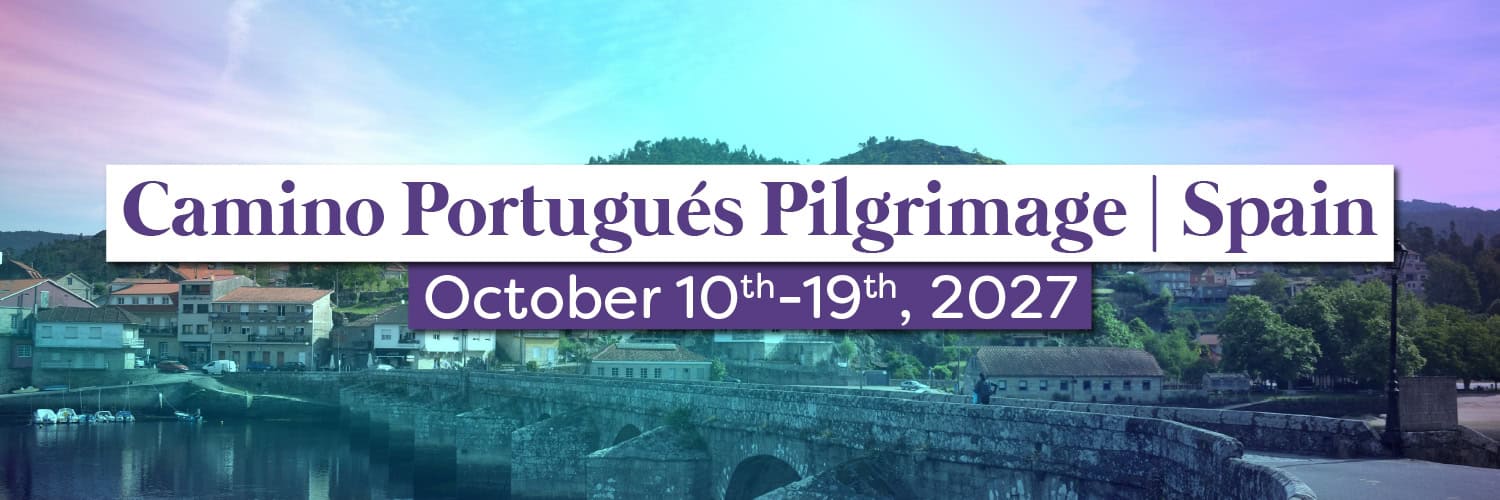
Registration Opens Wednesday, April 14th 2027
Sober Camino de Santiago: An Alcohol-Free Pilgrimage Through Coastal Galicia
Lace up your boots. This is life after the bottle, one beautiful step at a time.
Join Recovery Elevator for a sober Camino de Santiago like no other — a 10-day pilgrimage along the historic Portuguese Coastal Camino, from the medieval seaside town of Baiona all the way to the legendary Cathedral of Santiago de Compostela. No bars. No “one drink won’t hurt.” Just you, the Atlantic coastline, a community of fellow alcohol-free travelers, and a finish line you’ve been walking towards your entire life.
This is the inaugural journey in Recovery Elevator’s new Pilgrimage Series.
This isn’t your average walking tour, and it’s not your average sober travel retreat either. It’s a pilgrimage in every sense — physical, spiritual, and deeply personal — built for people who’ve ditched the booze and are ready to discover what they’re actually capable of.
Why Walk the Camino Sober?
At Recovery Elevator, we believe the opposite of addiction is connection. On this trip, you’ll connect with:
- The land — 120+ kilometers of Galician coastline, medieval bridges, eucalyptus forests, and quiet country lanes
- The culture — experience shellfish harvesting with local gatherers, take a private boat trip to Cortegada Island, and immerse yourself in pilgrim history.
- Your fellow AF travelers — a group of people who get it, with zero pressure and zero judgment
- Yourself — one solid, sober step at a time, all the way to Obradoiro Square
There’s no hangover at the end of this trail. Just the kind of clarity that comes from doing something hard, on purpose, completely present.
Give back as you go: spend a day on a hands-on beach clean-up, helping protect the same Galician coastline you’re walking along.
Sober Travel Requirements & Details
Limited to 20 alcohol-free travelers. Participants must have at least 15 days of sobriety to join this transformative spiritual pilgrimage.
Ready to walk, connect, reflect, and grow?
At Recovery Elevator we believe the opposite of addiction is connection: we will be connecting with nature, the stars, the ocean, the land, food, others who have ditched the booze, and most importantly ourselves. These trips are special because we all have one common goal: living an authentic alcohol-free life.
Your Sober Travel Retreat Itinerary
Day 1 (Oct 10) — Arrival in Baiona
Touch down and settle into the medieval town where Christopher Columbus’s ship La Pinta first landed after reaching the Americas. Wander cobblestone streets, explore the Monterreal Fortress, and breathe in your first Atlantic sunset before the walking begins.
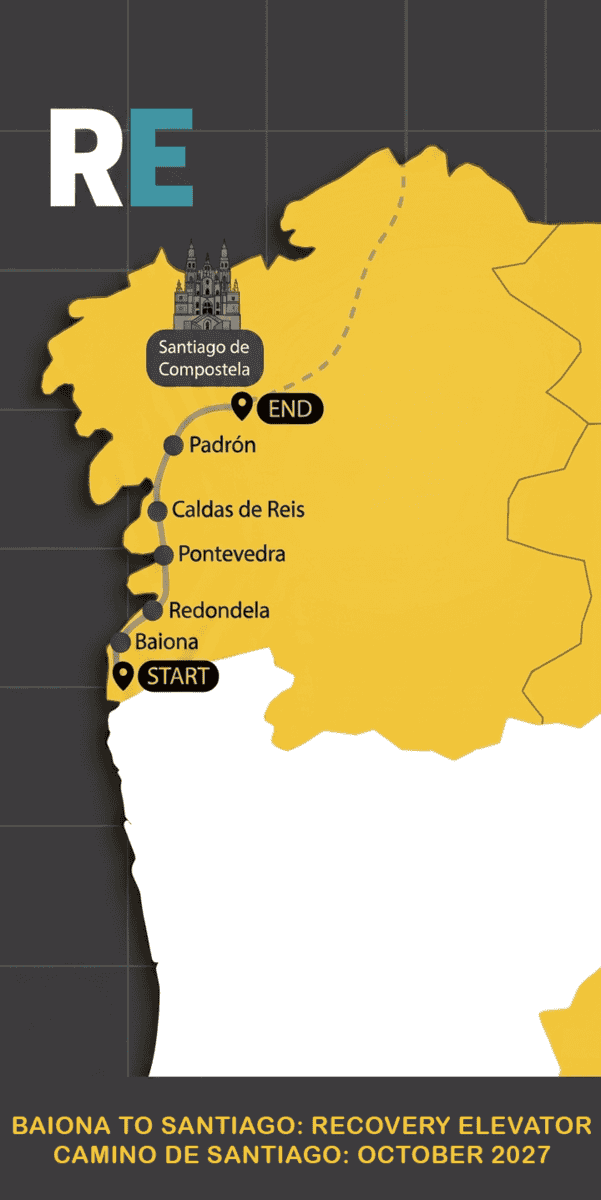
Day 2 (Oct 11) — Baiona to Vigo (14 mi)
Your boots hit the Camino. Follow the coastline through Nigrán and Canido, past sandy beaches and dramatic headlands, with sweeping views of the Cíes Islands the whole way into Vigo, Galicia’s largest fishing port.
Day 3 (Oct 12) — Beach Clean-Up Experience in Vigo
A rest day with purpose. Join a guided beach conservation project, learn about marine biodiversity, and give something back to the coastline that’s been carrying you forward.
Day 4 (Oct 13) — Vigo to Redondela (10 mi)
Trade ocean views for peaceful woodland as you climb toward Redondela, where the Coastal and Central Caminos merge into one path. Panoramic views over the Vigo Estuary along the way.
Day 5 (Oct 14) — Redondela to Pontevedra (12.5 mi)
One of the most beloved stages of the whole route — ancient stone bridges, eucalyptus forests, and the medieval Ponte Sampaio crossing over the Verdugo River. Finish in Pontevedra’s gorgeous old town.
Day 6 (Oct 15) — Maritime Experiences in Carril
Pull on a pair of waders and learn the centuries-old art of shellfish harvesting alongside local gatherers. Then board a private boat for Cortegada Island, part of the Atlantic Islands National Park, and walk through Europe’s largest laurel forest.
Day 7 (Oct 16) — Pontevedra to Caldas de Reis (14 mi)
Cross the historic Burgo Bridge into terraced hillsides, pass the waterfalls and watermills of Barosa River Natural Park, and soak it all in at the thermal town of Caldas de Reis.
Day 8 (Oct 17) — Caldas de Reis to Padrón (11 mi)
A quieter day through forests and small villages, ending in Padrón — one of the most symbolic stops on the entire Camino, and famous for its peppers and literary history.
Day 9 (Oct 18) — Padrón to Santiago de Compostela (15.5 mi)
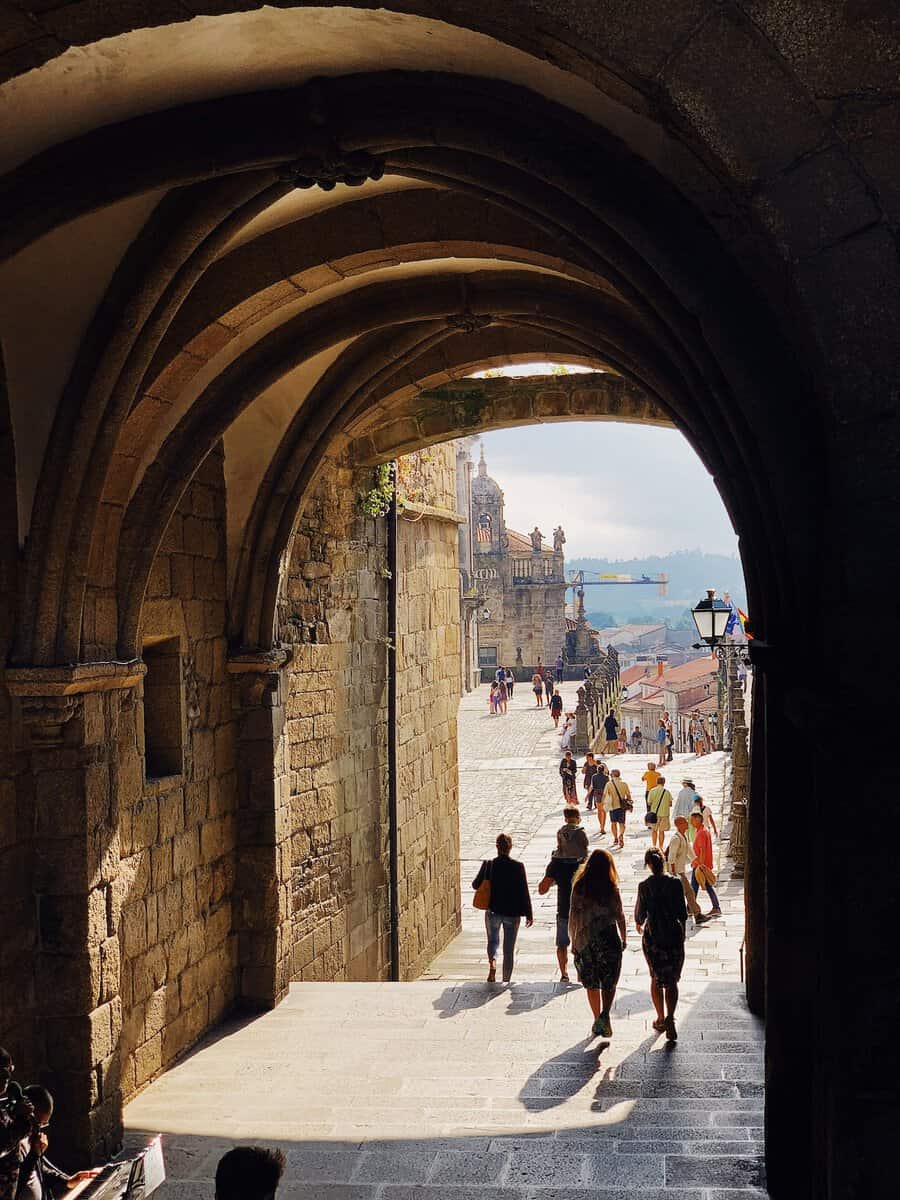
The big one. The final stretch into Santiago de Compostela. As the cathedral spires come into view over Obradoiro Square, you’ll understand why pilgrims have made this exact walk for over a thousand years — and why doing it alcohol-free makes it mean even more.
Day 10 (Oct 19) — Departure
After breakfast, a private transfer takes you to Santiago Airport. You’ll go home with sore feet, a full heart, and proof that you don’t need a drink to feel this alive.

What’s Included in This Sober Camino de Santiago Retreat
- 7 nights in shared accommodations on the Camino with private bathrooms, plus 1 extra night in Vigo and 1 extra night in Pontevedra (9 nights total). A limited number of single rooms are available for an additional $495 (3 available).
- 9 breakfasts and 3 dinners
- Group workshops: Meditation, breathwork, and guided discussions
- Airport transfer from Porto to Baiona, and from your Santiago hotel to Santiago airport
- An accompanying guide for the full walking route
- The beach cleaning experience
- Traditional shellfish harvesting experience
- The Cortegada Island visit
- All transfers to and from included activities
- Luggage transfers during all walking days (1 bag per person, 37 lb max; additional charges apply for heavier bags)
- 24-hour emergency phone support
- Maps, notes, and your official Pilgrim’s Passport
Not included: Flights, required travel insurance, lunches, 6 dinners, and any services not specifically listed above. Only 3 single rooms are available for an additional $495.
Travel insurance is required for this trip and is not included. Please purchase your own travel insurance shortly after registering for the trip — we’re happy to point you toward providers if you need a recommendation. We like Battleface and it shouldn’t be more than $175.
Is This Sober Travel Retreat Right for You?
This trip is built for sober and alcohol-free travelers who want adventure, nature, and a meaningful physical challenge — without a single drop of pressure to drink. Whether you’re newly sober or have years behind you, if you’ve ever wanted to walk the Camino, this is your sign.
You don’t need Camino or long-distance hiking experience. You need comfortable shoes, an open heart, and a willingness to show up for yourself, one kilometer at a time.
If you’re looking to meet new friends, especially those who no longer drink, then we’ll see you there.
Ready to Walk Your Own Camino?
Spots are limited. This is an intimate, small-group experience — not a big bus tour — so we can actually get to know each other along the way.
Reserve Your Spot on the Sober Camino de Santiago Retreat →
Got questions about the trip, the pace, or what to pack? Check out the FAQ below, or email us at info@recoveryelevator.com
AF Camino de Santiago
Registration opens Wednesday, April 14, 2027– Shared accommodations for 9 nights
– All ground transportation during the trip
– AF Workshops, Breathwork, Nature Walks,
– All breakfasts and 3 dinners
– One alcohol-free beverage (coffee, tea, soda, or juice) is included with each group meal.
– All gratuity and tips
– Airport transfers
– RE Camino de Santiago shirt
**Passport Expiration – passport must be valid for 6 months AFTER your return date.**
We require at least 15 days from your last drink to attend this trip
What is a sober Camino de Santiago retreat?
It’s a guided, alcohol-free version of the centuries-old Camino de Santiago pilgrimage, designed specifically for sober and sober-curious travelers. You walk the historic Portuguese Coastal Camino route with a supportive group, without any alcohol-centered activities or pressure to drink.
What will the workshops be like?
Expect a mix of guided meditation, breathwork, and group discussion throughout the trip — designed to help you process the experience, not just walk through it. You’ll also break into smaller groups at points along the way, giving you space for more personal, honest conversation than a full-group setting allows. Think less “lecture,” more “walking alongside people who get it” — these sessions are built to deepen the connection and reflection that’s already happening with every step.
What do my flights need to look like?
Arrivals
Fly into Porto Airport (OPO) in Portugal. We recommend booking a flight that arrives by 2:00 PM so you have plenty of time to meet the group transfer to Baiona and enjoy the charming seaside town before the Camino begins. Your included transfer will take you to Baiona, where we’ll spend our first night.
Departures
Fly home from Santiago de Compostela Airport (SCQ) in Spain. We recommend booking a flight that departs after 2:00 PM. After breakfast, you’ll have time to store your luggage at the hotel and explore Santiago before taking the included group transfer to the airport.
NOTE ** You’ll be flying into Portugal and home from Spain, so you’ll need to book a multi-city itinerary rather than a standard round-trip ticket.
Please email your flight info to info@recoveryelevator.com when you have it.
How far do you walk each day? What shoes do I wear?
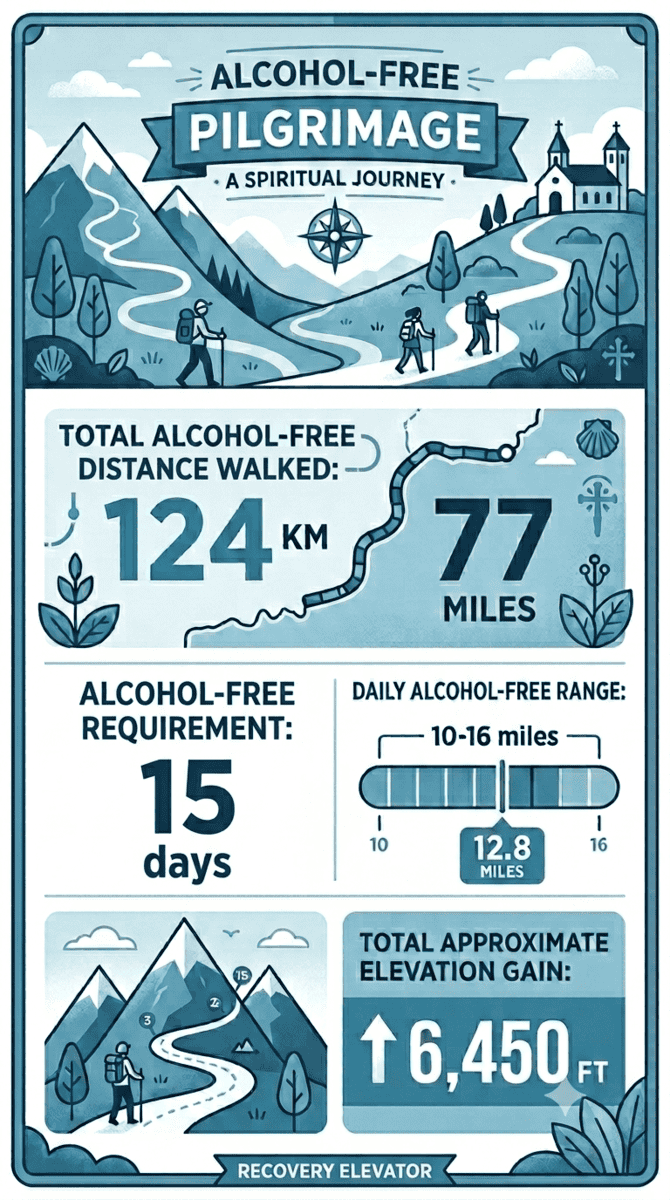
Daily walking distances range from 16 to 25 kilometers (about 10 to 15.5 miles), spread across five walking days, with rest and experience days built in between. Day 9 is the “big one” with a 25 km (15.6 mile) walk, but you’ll build up to this distance throughout the trip.
We recommend hiking in comfortable shoes, or running shoes. You can walk in hiking boots, but those can also be heavy and cumbersome.
VERY IMPORTANT – make sure you break in your shoes or boots before coming to Spain.
Do I need to be an experienced hiker?
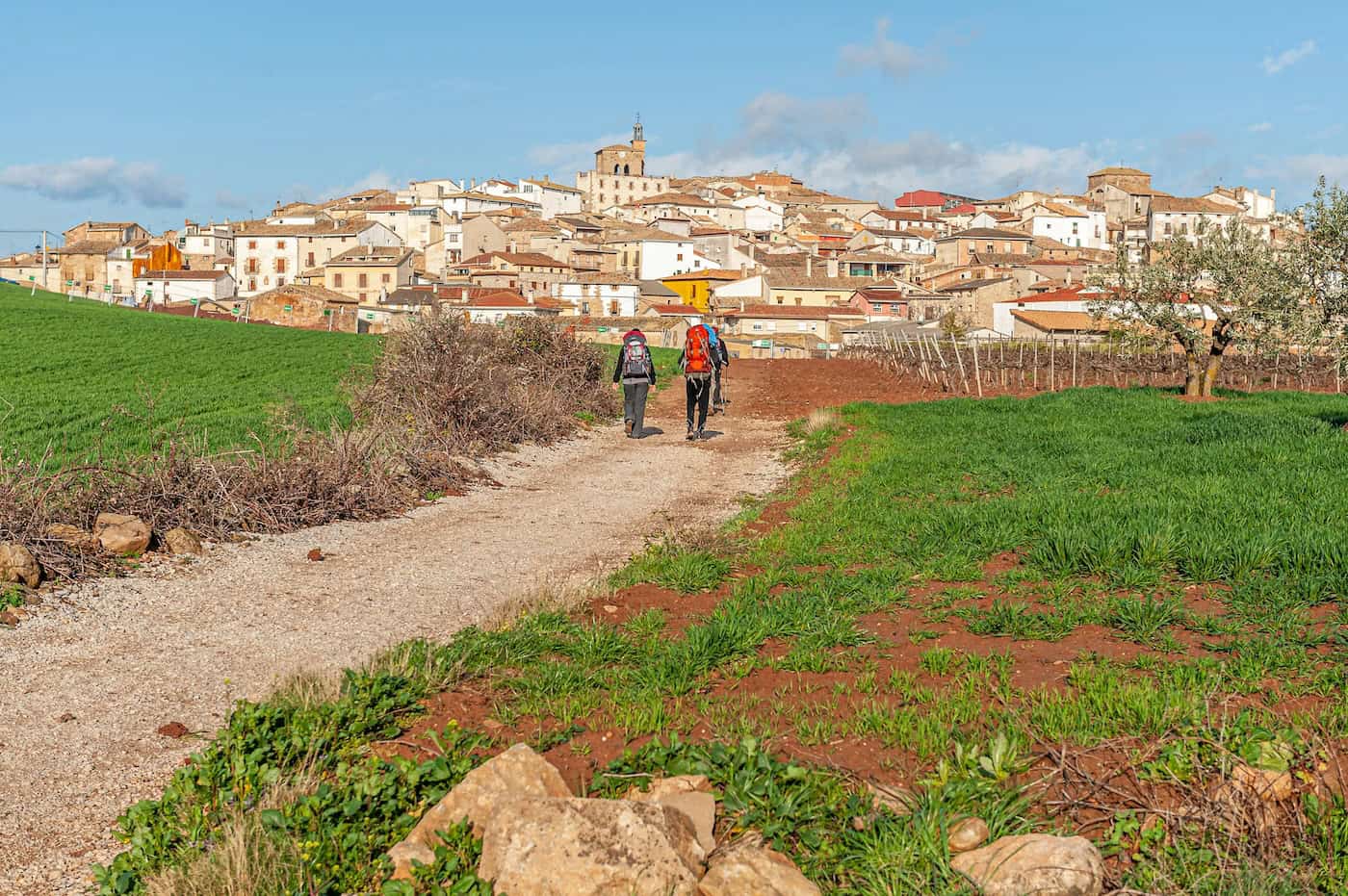
No. The terrain is moderate — coastal paths, country lanes, and forest trails — and the pace is designed for everyday people, not endurance athletes. A reasonable level of fitness and comfortable, broken-in walking shoes are what matter most.
Why is there a 15 day sobriety requirement for this retreat?
We want to ensure that attendees are not detoxing from alcohol at the retreat. We also want to mention this retreat is not a substitute for in-patient or out-patient treatment.
We ask that participants be solidly committed to an alcohol-free life. If you’re unsure whether this trip is the right fit for where you’re at, reach out and we’ll talk it through with you directly.
Is this trip only for people in recovery from alcohol addiction?
Not necessarily. This retreat welcomes anyone living alcohol-free — whether that’s through formal recovery, a sober-curious lifestyle, or simply a personal choice to walk through life without drinking. What matters is that everyone on the trip shares the same alcohol-free commitment.
Will I be walking the whole route alone, or with a group?
You’ll walk with the group the entire time, along with an accompanying guide for the full route from October 10–18. This is an intimate experience, not a large bus tour.
If you choose to walk alone for a portion of the camino, that’s fine, just let us know 👍
What's the accommodation like?
You’ll have shared accommodations with a private bathroom every night, including extra nights in Vigo and Pontevedra — 9 nights total.
You’ll have a roommate or roommates. If you’d like a single room, we have three available at $495 extra. Email info@recoveryelevator.com to reserve.
Is travel insurance required?
Yes. Travel insurance is required to join this retreat and is not included in the trip price. Flights are also not included.
We’ve recommended the insurance company Battleface over the years and the quotes usually come in less than $200 depending on the coverage you’re comfortable with.
What's included in the price?
9 nights of shared accommodation, 9 breakfasts, 3 dinners, an accompanying guide for the walking portion, airport transfers, luggage transfer during the walk, AF workshops, the beach clean-up experience, the shellfish workshop, the Cortegada Island visit, belly laughs, lame jokes from Paul, 24-hour emergency support, and your official Pilgrim’s Passport.
What happens to my luggage while I'm walking?
Your main bag is transferred ahead to your next accommodation each day (1 bag per person, up to 17 kg). You’ll only need to carry a light daypack with water, snacks, and essentials during the walk itself. There is an additional charge if your bag exceeds 17 kilos or 37 pounds.
Can I do this trip if I've never done a group retreat before?
Absolutely. Many of our travelers are joining their first Recovery Elevator retreat. You don’t need any prior experience with group trips, the Camino, or international pilgrimage walks — just a willingness to show up and meet other alcohol-free travelers. Most of our guests are repeat Recovery Elevator Af travelers, and they can show you the ropes.
Who is this retreat for?
This retreat is for someone who wishes to connect & travel with others who have also ditched the booze. This trip is for those seeking to grow mentally, physically and spiritually on one of the most spiritually significant pilgrimages in the world.
The average sobriety time on this retreat is usually around 1 year. The retreat is not 12-step based, and we believe there is no right or wrong way to quit drinking, and remain alcohol-free.
If you are hoping to establish deeper connections with others, yourself, the planet, the birds, the ocean, stars and more, then we’ll see you there. ?
If this event isn’t for you, check out our events page for other types of events.
**This retreat is not a replacement for treatment or other detoxing services.**
How is this different from a regular Camino de Santiago tour?
A standard Camino tour doesn’t account for the social pressure around alcohol that’s woven into typical pilgrim culture — albergue bars, celebratory wine at dinner, and so on. This retreat is built specifically around an alcohol-free experience, with a like-minded group and a guide who understands sober travel.
Yes, we are walking towards a destination, but on this tour, we try to embrace the journey, and the very step you’re on in that moment.
Is 2027 a special year to walk the Camino?
Yes — and the timing couldn’t be better. 2027 is a Camino Holy Year, also called Año Xacobeo, which only happens when July 25th (the Feast of St. James) falls on a Sunday. It’s a rare alignment, just 14 times a century, and the last one was 2021.
During a Holy Year, the Cathedral’s Holy Door stays open all year instead of staying sealed shut. Pilgrims who pass through it are taking part in a tradition that stretches back nearly a thousand years. The whole Camino comes alive for it: more fellow walkers on the trail, more festivals and cultural events in the towns along the way, and a deeper sense that you’re stepping into something bigger than yourself.
What should I pack?
Good news: this isn’t a gear-obsessed expedition. You need less than you think. Here’s the short list.
On your feet
- Broken-in walking shoes or trail sneakers (please, not brand new out of the box)
- A second pair of shoes or sandals for evenings
- Wool or synthetic hiking socks (cotton holds moisture and invites blisters)
On your body
- Moisture-wicking layers, not cotton — temperatures swing from cool mornings to warm afternoons
- A packable rain jacket. October on the coast means sun one hour and a passing shower the next. An under $5 poncho works great.
- A light fleece or packable down layer for evenings
- A hat and sunglasses for sun, plus a buff or light beanie for wind off the Atlantic
On your back
- A daypack (20–25L) for water, snacks, and layers — your main bag travels separately each day
- A reusable water bottle or bladder
- A basic blister kit (moleskin, tape, the usual suspects)
- Travel-size toiletries and any personal medications in your carry-on
For the soul
- A journal. You’ll want one.
- Whatever small object grounds you, a photo, a token, a reminder of your “why”
- An open mind and zero expectations about how this is supposed to go
Leave at home
- Anything you wouldn’t want to carry on your back for 16-25km
- The instinct to overpack “just in case.” The Camino has a way of providing.
We’ll have a pre-trip zoom call where we’ll discuss packing more in depth.
How much extra money should I bring? Should I exchange money before departing?
Plan on bringing some spending money for the meals that aren’t included. Breakfast is covered every day, but lunches are on your own, and only three group dinners are built into the trip, so you’ll be covering the rest of your dinners and all your lunches out of pocket. A typical menú del día lunch in Spain runs around €12–15 ($14 – $17), and a casual dinner is usually €20–30 ($23 – $34), so budgeting roughly €250–350 ($350 – $400) for the week covers meals comfortably, plus a little extra for coffee, snacks, souvenirs, or that bottle of water you didn’t know you’d need on day six.
Most restaurants, cafés, and shops along the route accept major credit cards, so you don’t need to carry a thick stack of bills. That said, it’s smart to have some cash (euros) on hand for small cafés, market stalls, or rural stops where card machines are less reliable. You don’t need to exchange currency before you leave home. You can withdraw euros from an ATM or exchange cash at the airport when you land, or at a local bank once you’re in Spain or Portugal. Just check with your bank ahead of time about foreign transaction fees so there are no surprises.
It’s a good idea to call your bank and let them know you are traveling so international ATM withdrawals are not declined.
What is the weather like during that time of year?
October in Galicia is mild, but it’s not a guarantee of sunshine. Expect daytime temperatures in the 50s to low 70s°F (12–22°C), with cooler mornings and evenings as you head further north and inland toward Santiago. The Atlantic coast means conditions can shift fast: a sunny morning can turn into an afternoon shower, and the wind off the ocean can make it feel cooler than the thermometer says, especially on the more exposed coastal stretches.
Rain is part of the package this time of year, particularly as you move into Galicia, so a good rain jacket isn’t optional gear, it’s essential gear. The upside: October also means thinner crowds, golden autumn light, and a quieter, more reflective Camino than the summer months. Layers are your best friend. You’ll likely start most mornings in a fleece and end most afternoons in a t-shirt.
Is this trip physically challenging?
Yes, but “challenging” doesn’t mean “extreme.” You’ll be walking 16 to 25 kilometers (about 10 to 15.5 miles) a day across five walking days, on a mix of coastal paths, country lanes, and forest trails. Most days take somewhere between 4 and 7 hours of walking, with breaks built in along the way.
You don’t need to be a marathoner or a seasoned hiker. What matters most is a reasonable baseline of fitness and a pair of broken-in shoes. If you can comfortably walk for a few hours at a time, you can do this Camino. That said, this isn’t a stroll either, by the end of the week your legs will know they’ve done something.
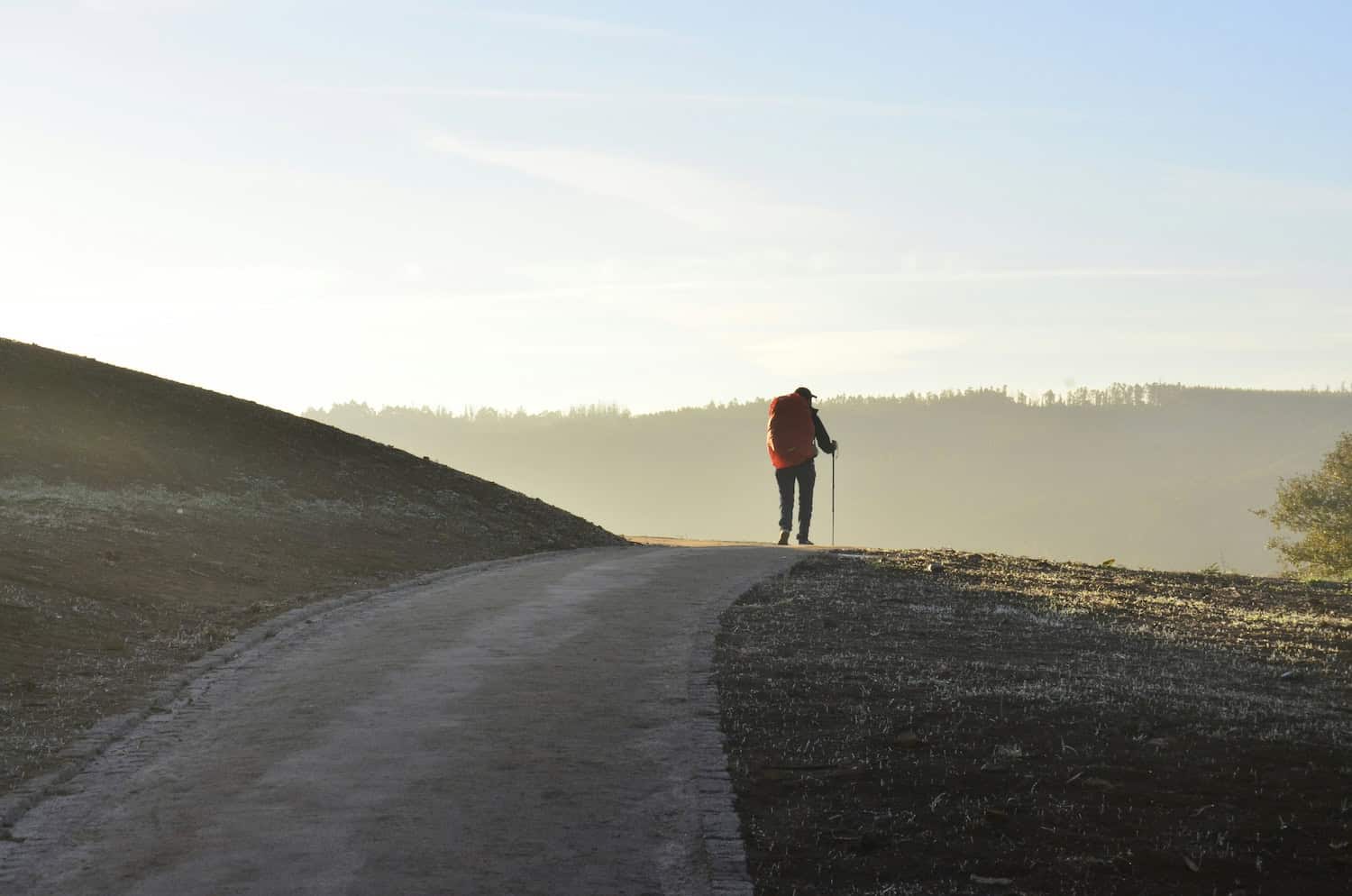
The real test isn’t always physical. Plenty of pilgrims find the mental and emotional side, showing up day after day, sitting with your thoughts for hours at a time, is the bigger challenge. That’s kind of the point. We recommend starting to walk regularly in the weeks before the trip, even 30–45 minutes a few times a week, so your body is ready to meet you where your heart already is.
Who is leading the retreat?
Recovery Elevator podcast host Paul Churchill is the retreat leader. Paul has been hosting sober retreats internationally since 2018, and he’s the first to tell you that distance is part of the medicine. Getting far from your normal routine, your normal stressors, and your normal excuses helps people truly “drop into” the experience in a way a weekend retreat closer to home just can’t match.
Paul got sober in 2014 and has spent the years since turning that experience into Recovery Elevator, a podcast with over 590 episodes and 10 million downloads, and Café RE, a nonprofit alcohol-free community thousands of people call home. He’s the author of Dolce Vita and the upcoming This Is How We Quit, and he’s walked his own version of this path long enough to know exactly the kind of space people need to feel safe being themselves without alcohol. On this trip, you’re not walking with someone who read about recovery. You’re walking with someone who lived it, wrote about it, and built a career helping other people walk through it too.
You won’t be navigating the Camino on your own, either. A local guide walks the entire route with the group every single day, handling logistics and local knowledge so you can focus on the walk itself and the people next to you.
Is the Camino de Santiago safe?
Yes. The Camino is one of the most well-traveled, well-marked pilgrimage routes in the world, and millions of people walk it safely every year, solo travelers included. You’ll be moving through small towns and coastal villages with a steady stream of fellow pilgrims around you, not remote wilderness, so help, food, and a friendly face are rarely far off.
On this trip, you’re not walking it alone anyway. A local guide is with the group every day of the route, and you’ve got an entire community of fellow sober travelers walking alongside you. The usual common-sense travel rules apply (watch your belongings in busy areas, stay aware on the road sections, listen to your body), but this is not a trip where safety should be the thing keeping you from saying yes.
Camino de Santiago
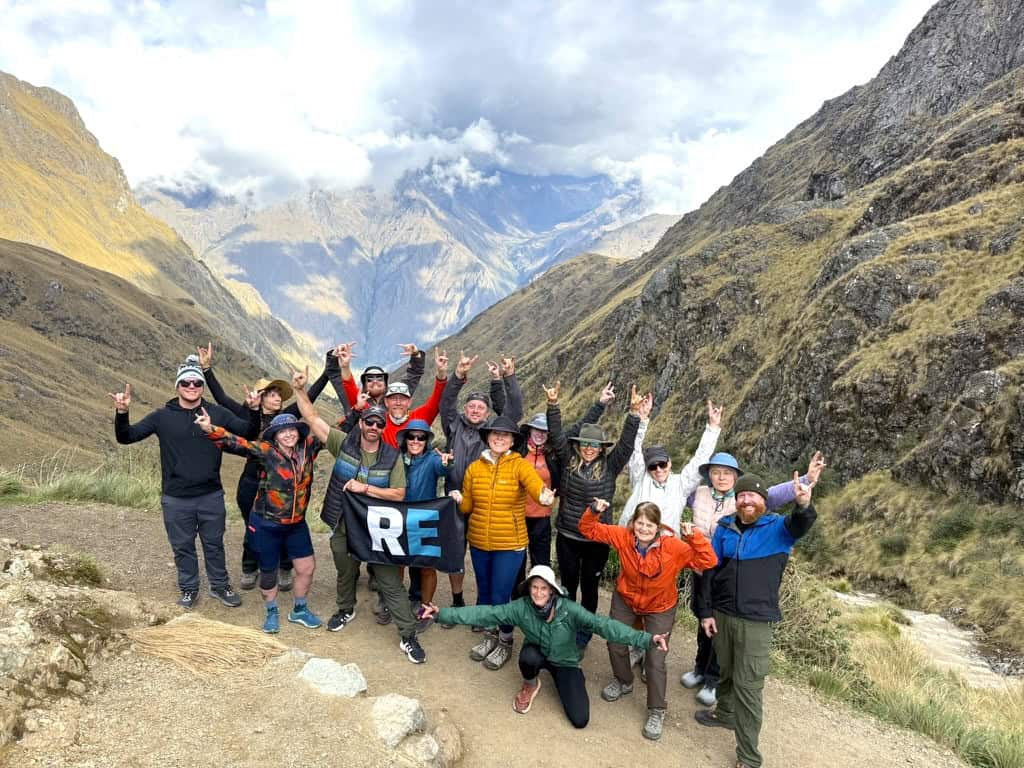
Recovery Elevator 25 Mile pilgrimage in the Peruvian Andes