by Paul Churchill | Aug 2, 2016 | Early Sobriety, Expectations
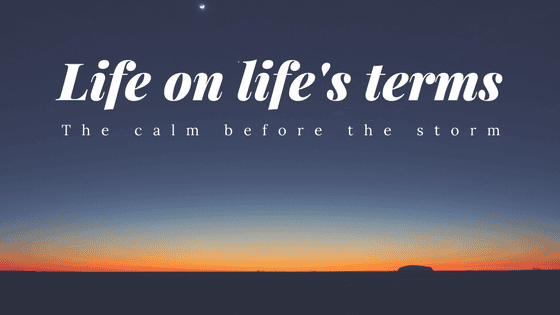
So when I think about my mind, I imagine myself paddling a canoe, with the water beneath me as my thoughts. Sometimes it’s a pleasant current underneath a warm sun. Other days, it’s a bit rainy, maybe a few waves, but manageable.
Today, on the other hand, I was getting tossed around tumultuous stormwaters. Lightening was striking, thunder was booming, and my paddles were flailing about in feeble attempt to steer my lurching vessel. It was exhausting.
And, in typical alcoholic fashion, my first instinct was to crawl into a hole. I yearned for isolation. I wanted to be far away from ANYBODY. You know, alone, with all those amazing, self-defeating thoughts of mine!
BUT that was simply not an option tonight! Because for my business I had to be present at one of the biggest community music events and be social. I was dreading it. UGH! MY LIFE, IN SHAMBLES, BECAUSE I HAVE TO BE BUBBLY! WOE IS ME.
So I went. And I saw that wine, and I thought…”Oh, I’ll just start again tomorrow. What’s another Day 1? I’ve already had a rough day and I’ve eaten tons of sugar and I want to feel social.. etc etc excuse excuse.” There I was, wanting to ENHANCE with booze.
But I let the thought come, and then I let it go. I was DETERMINED to PROVE to myself that, yes, I CAN have a BLAST sober.
And guess what? I totally did. It was awesome. Shared some great laughs with old friends. Came to a very profound realization that being present for and connecting with others really helps pull me away from myself (AH-HAH, so THAT’S how AA works!).
After it was all said and done, I drove home, set my stuff on the counter, poured myself a drink of water, went into my room, looked around, and that’s when I realized….
The water beneath my canoe was calm. I could practically see the full moon reflection shimmering on the water’s surface. Couple of frog chirps, even.
I had made it through the storm. I wasn’t sideways anymore. Everything is fine.
Sometimes we just have to trust that this, too, shall pass.
by Paul Churchill | Aug 1, 2016 | Podcast
Podcast: Play in new window | Download
Subscribe to the Recovery Elevator Podcast Apple Podcasts | | More
Simon, with 15 years of sobriety, shares how he did. Three years ago, Simon started the Hope Rehab Center in Thailand and has been helping people change transform their lives.
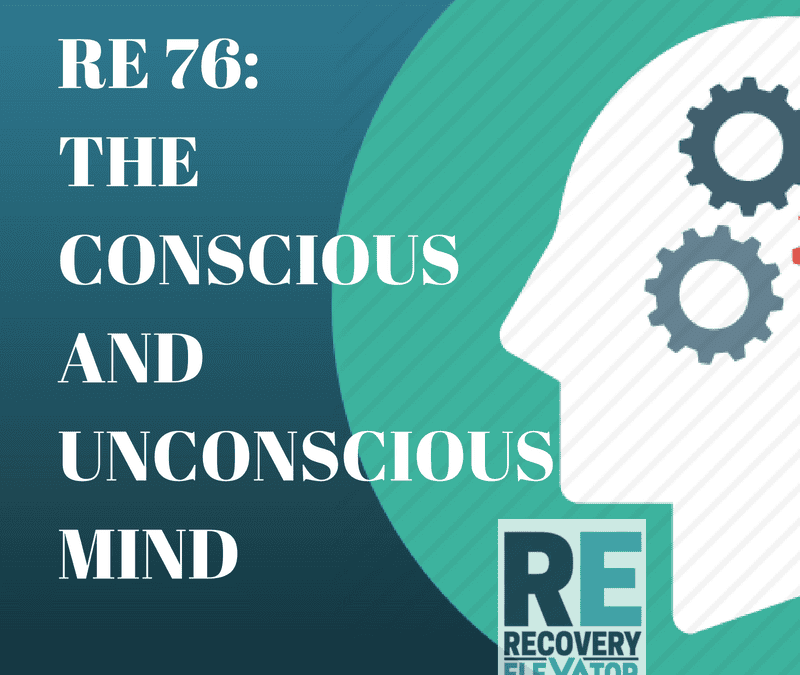
I recently read the book “This Naked Mind – Control Alcohol” by Annie Grace and the chapter covering the how the brain worked was fascinating.
Conscious: Aware of something, knowing that something exists or is happening.
Unconscious: The part of the mind a person is not aware of but is a powerful force in controlling behavior.
Consciousness: Being aware of something within oneself. The upper level of mental life that a person is aware of as contrasted with unconscious process.
Warning: This may blow your mind…
- The unconscious mind is responsible for desires.
- Studies show we have two separate thinking systems: the conscious mind and the unconscious mind.
- When we want something to change in our life, we usually make a conscious decision. However, drinking is no longer a conscious decision.
- The unconscious mind doesn’t always get the memo!
- Unconscious learning happens automatically and unintentionally.
- We are conditioned to think drinking enhances our lives and makes us happy.
- This is why when we want to drink less, our unconscious mind tells us to drink more. [Insert major dilemma here.]
- We have been conditioned to believe in alcohol. To believe that me and some random Captain would make it happen.
- The unconscious mind is not logical. It’s comprised of feelings, experiences and observations. It’s the source of love, jealousy, fear, kindness and sadness.
- When a person makes a decision to quit drinking alcohol, their unconscious mind is never in on that conversation. I have to say, “Gary, pull up a chair, let’s have a chat.”
- Studies dating back to the 1970’s indicate our unconscious mind makes a decision 1/3 of a second faster than our conscious mind.
- The unconscious mind controls the emotions. When someone tells you to stop having a bad day, that never works. But over time, positive reinforcement can work.
- Liminal thinking, which we will get to in later podcast episodes, is how will cover how to converse with the unconscious mind.
- The unconscious mind is formed by beliefs, conclusions, assumptions, experiences and observations. Often, it is far separated from reality which is where the conscious mind lives.
- Our culture of ‘drinking makes everything better’ has been ingrained into our unconscious mind without us ever knowing. One easy way to challenge this, which we often never do, is to look for external validity. For example, bud light makes you a better beach volleyball player. Go to a beach and try to find a real life example if this. It won’t happen!
- We let the unconscious mind determine our thinking because we like certainty. In the conscious mind, there is so much unknown and that is always scary. The unconscious mind is a bubble of safety where we feel comfortable.
- Why did I find it so hard to quit drinking? Well, I knew I wouldn’t have a good time at a social event sober, I knew I wasn’t funny, I knew I wouldn’t be able to chat with girls. I never stood a chance at quitting drinking unless a pain point was strong enough, aka, the bottom.
- We can address this by bringing unconscious experiences, observations, assumptions and conclusions, into conscious thought. We do this through knowledge and practice.
- Before we drank alcohol, we were happy joyous and free, we didn’t miss it.
- The Author Terry Pratchett says, “We need to be able to at any time, accept that fact that we all could be absolute and utterly wrong.”
SHOW NOTES
[ 11:43 ] Paul Introduces Simon
Simon is from the U.K. and now lives in Thailand. Simon has been sober for 15 years. He is 53 and is so grateful to be alive. Simon loves traveling.
[ 12:58 ] What was your bottom? When did you finally decide to stop drinking?
“I think I had many bottoms. Rock bottoms. My absolute rock bottom came when I overdosed as a heroine addict – I woke up alone on my kitchen flow with the syringe still in my arm. My mother was leaving food parcels outside my front door and I realized that my mother would have been the one who found me if I did not wake up. This drove me to get help again. It was a 12-step rehab and I fully embraced it.”
[ 15:22 ] Where did alcohol play a part in all this?
It played a part consistently throughout, often alcohol was the substitute for drugs. “I’m an addict and an alcoholic, but to me they are just words.” The foundation of this 15 years in recovery was in AA. I went to AA seeking some maturity and rigorous direction from a sponsor. My last bottom took me to a place where I was willing to do anything to recover.
[ 17:45 ] On Simon’s Center in Thailand – Hope Rehab Center
It’s a traditional, 12-step rehab center combined with contemporary methods like mindfulness and fitness. We also use CBT (cognitive behavioral therapy) to address thinking patterns that may be destructive. We do detox for both alcoholic and drug-users.
[ 19:38 ] Mindfulness
It encourages a practice whereby a person doesn’t engage in their thoughts. It’s more about letting go of the thoughts, letting them flow by, clearing the mind. “Being present in the moment.”
[ 21:19 ] How many times have you been to rehab?
“Luckily I got the opportunity to go many times, 12 times, but please understand that a number of times I left very, very quickly. I would run. Demand my possessions. And run. No one could have stopped me. I wouldn’t follow through and then the same old gremlins and demons would come up.”
[ 24:00 ] Paul summarizes the roadmap to recover. One is too many and one thousand is not enough…
[ 28:53 ] What are your success rates at Hope Rehab Center?
This is a very, very serious business. It’s a life and death disease. The people are very passionate, it’s a very high-stress job. ‘We’ are up against big odds. It has to do with personal motivation, the motivation of the client. We are very, very strict and take only highly motivated participants.
[ 36:38 ] What is the stigma like in Thailand?
[ 42:11 ] What does your recovery portfolio look like today? Walk me through a day of Simon.
In my early recovery I was a gardener and I went to at least one meeting a day. I knew that I needed to stay real close. I began to mature and then to travel. I continued with self development and participated in the Mankind Project, developing my consciousness and spirituality.
[49:19] Rapid Fire Round
- What was your worst memory from drinking? “Waking up on the dock in Athens, Greece with no money, covered in scrapes and bruises, feeling so sick and not knowing how I was going to get back to England.”
- Did you ever have an “oh-shit” moment? “I think I swapped my first car for some drugs.”
- What is your favorite resource in recovery? “It’s a personal choice, but the third step, the spiritual, has made all the difference to me.”
- What’s the best advice you’ve ever received (on sobriety)? “Let it go. Just let it go.”
- What parting piece of guidance can you give to our listeners who are in recovery or thinking about quitting drinking? “Reach out and accept some help. We can’t do it alone. We need to do it together.”
QUOTABLES
“When you do something mindfully it means focusing your intention solely on a thing.” – Simon
“I cannot afford to do it once. Not once.” – Simon
“Don’t live in ‘No Man’s Land,’ that place where you’re not really happy, but you’re not unhappy enough to do anything about it. Don’t passively accept what comes your way; drive your life toward what you really want.” – Anthony Robbins
Resources Mentioned in this Episode
Connect with Cafe RE
- Cafe RE Meetup in Chicago Oct. 14-16 – If you’d like to join us, head over to Cafe RE!
- For $12.00 per month, you can unlimited, private access to groups of like-minded people via meetups, private-unsearchable Facebook groups, and travel.
- First month FREE with Promo Code Elevator.
Promo Code: Elevator
Hope Rehab Thailand Center
Hope Rehab Center on Facebook
Mankind Project
“We took the elevator down, we gotta take the stairs back up, we can do this!”
Don’t forget to support the Recovery Elevator Podcast by shopping at Amazon with the Recovery Elevator link:
www.recoveryelevator.com/amazon/
This episode was brought to you by Cafe RE and get your daily AA email here!
by Paul Churchill | Jul 18, 2016 | Podcast
Podcast: Play in new window | Download
Subscribe to the Recovery Elevator Podcast Apple Podcasts | | More
In this Episode, Ronnie, with 25 years of sobriety shares how he did it. We also discuss 50 ways to stay sober this summer.
Episode #74 RE with Ronnie Marmo
Ronnie got sober a few times throughout his life, once at age 17 and again at age 20. At age 20, he found himself smoking crack on the sidewalk after 3 years of sobriety… One drink of alcohol was his gateway drug.
Ronnie’s background:
Lives in L.A. and works as an actor and director, running two theater companies. Check out 68 Theatre Company. Ronnie is 45 and married with a dear family… For more information on Ronnie and his work – ronniemarmo.com.
Take us back to age 20…
Was that your bottom?
For me, “I was out of control ever since I started drinking. I always drank and got high in the same way. I was never a social drinker, I had no interest in drinking socially.”
It went something like this – one gallon of vodka, one quart of Yukon Jack, and then I found myself waking up at a sober picnic. My sponsor asked me if I was humble enough… I said yes, and went back to rehab for the 3rd time.
What is it like being sober in your industry?
It’s like anything, many people are sober, once you start talking “our” language. Those who do drink and get high, it’s never an issue, but I tend to gravitate towards people who are sober.
Let’s talk rules: Did you ever try to put rules into place?
“I thought alcohol was a problem, but I didn’t think it was my biggest problem. I constantly negotiated with myself. Normal people don’t hide bottles. Normal people don’t wake up needing a drink.”
People have gone on retreats and think that anxiety is the issue, or depression is the issues, when underneath it is really the alcohol.
Literally, every day of my life I spent my day trying to figure out how to get more booze.
Do you remember your first intensive rehab?
“I hadn’t even seen the STEPS on the wall!”
Now, I have a healthy fear of booze.
Talk to me more about this healthy fear, I’m terrified of this stuff…
When I look at it, it’s rare that I glorify a drink. When I see booze, I get nervous. If I ever take a second to glorify it. I immediately think I could destroy my life. It happens quickly.
That thought is so fleeting, it’s not even an option.
Bill W. and Dr. Bob:
http://theatre68.com/
Playing in north Hollywood, CA
Soon to star in the movie, Back in the Day.
Walk me through a day in your sobriety:
I don’t go to as many meetings as I should, but I never miss my Wednesday home meeting.
If I do these things daily:
If I don’t do these things, life is just harder…
What are your thoughts on relapse:
It’s a weird disease because you have to self-diagnose it. It’s 2:30 in L.A. right now, if I had a drink right now, I’d be smoking crack by 7:30pm… Relapse doesn’t have to happen, but if it does, hopefully you can choose sobriety again quickly.
What would you say to your younger Ronnie:
“The sooner you can get past being so dependent on the drink or the drug the sooner you can get on with your life, doing what you really want to do.”
“No matter where you go or what you do, drink a lot of water and walk slow.”
What’s still on your bucketlist:
- Doing what I love
- Helping others
- Shoot a movie in Italy for a summer…
All these items are attainable with sobriety.
Rapid Fire Round:
1.What was your worst memory from drinking?
Stealing my mother’s pocket book.
2.Did you ever have an oh-shit moment?
I had a spiritual awakening in the courtroom, asking the judge for help. The things that came out of my mouth were nothing that I had intended to say when I walked in.
3.What is your plan for sobriety moving forward?
Keep showing up and trying to be graceful, reaching out to others, and trying my best on a daily basis to stay with a formula that works. Keeping it super simple!
- Favorite resources?
Meetings
- Best advice you’ve ever received?
Drink a lot of water and walk slow
- What parting piece of guidance can you give?
If you are thinking about it (getting sober) and it’s on your mind, there’s a really good chance that you should be doing it. Give it a really strong 90 days.
“You might be an alcoholic if…”
You might be an alcoholic if you steal from someone you love just to get a drink or a drug.
You might be an alcoholic if after 2 years of sobriety you take a drink and later you end up smoking crack.
Connect with Ronnie:
Facebook: https://www.facebook.com/ronnie.marmo
Twitter: @Ronniemo22
50 Ways to stay sober this summer
- Wear sun screen – Lots of sunscreen
- La Croix Soda water. Drink lots of soda water
- Enjoy time in a hot tub / spring or sauna
- Beach trip: The small stream behind your neighbor’s house even has a beach
- Movie Day: The Anonymous People
- Scroll through your phone contacts and call someone you did wrong in the past. Don’t tell them what they did wrong, but what you did wrong
- Binge watch old TV episodes: Prefably not Mad Men, they drink like fish
- Yoga / Meditation
- Create a new sober drink concoction. Watermelon and milk is one I stumbled upon
- Do that fitness thing: Biking, swimming, whiffle ball, golf etc.
- Join a Book Club that actually reads the book
- Adopt-A-Pet, dog, cat, gecko
- Think of the most pressing issue in your life right now… and then write down what your part of it is.
- Go to a museum
- Pinterest – find new recipes or a DIY project on Diypete.com
- Google Mindfulness and what that really means
- Buy a new car; one that you have never drank in
- Learn how to shoot a bow and arrow
- Find something like Jolly Ranchers to subside cravings
- Build a pergola or Sauna at your house
- Gauge your emotional sobriety (in the future) by purposefully removing the staples out of your stapler
- Volunteer – be of service (This is a big one)
- Acceptance is the answer – period
- Take a look in the mirror and observe what you see. Get REal with yourself
- New Hobbies- Painting / Coloring
- Travel – take photos of you wearing your RE shirt
- Fundraise for the Recovery Elevator trip to Peru in April 2017
- Go to an outing wearing a shirt that says something like “sober as shit” so no one offers you a drink
- Listen to the RE Podcast episode 52 – one of my favorites
- Play a good natured joke someone
- Pay for the person’s order behind you – Regardless of what line you find yourself in
- Attend a 12 step meeting on the other side of town that speaks a different language
- Enjoy NA Drinks such as a virgin a piña colada
- Announce to the world you’re an Alcoholic via facebook and become accountable – the results will pleasantly surprise you
- Read page 471 in the big blue book: daily
- Once again, tell yourself acceptance is the answer
- Put your forehead on a baseball bat, spin around 15 times, and give the person closest to you a hug
- Google CBT – Charlie Beta Typhoid
- Jump rope – I’ve never heard of a relapse while jump roping
- We all know someone who should probably think about giving the bottle a rest. Invite them to Dairy Queen for their lunch specials from 11:30pm – 2pm and then take them to an AA meeting. They will most likely thank you later
- Water balloon fight – freezing balloons the night before is optional
- Watch the movie dodgeball with Ben Stiller, and then watch it again
- Third Eye Blind – All of it – #bestbandever
- Check out your local events calendar and go to an event you’re not interested in attending
- Laser Tag
- Take a sober road trip with another sober buddy of at least 100 miles each way. On your way, stop and say hello to me in Bozeman MT
- Get flowers or a gift card for someone you absolutely cannot stand to be around
- Ask yourself if you’re where you want to be in life at this very moment. If the answer is now, ask yourself if you’re willing to something about it
- Sunscreen – wear Lots of sunscreen
- Go get a natural high – sky diving, jump off the high dive at the local pool, go carts etc.
- Don’t Drink
Let me know at info@recoveryelevator.com how many of these you tried this summer!
Don’t forget to support the Recovery Elevator Podcast by shopping at Amazon with the Recovery Elevator link:
www.recoveryelevator.com/amazon/
This episode was brought to you by Cafe RE and get your daily AA email here!

by Paul Churchill | Mar 28, 2016 | Podcast
Podcast: Play in new window | Download
Subscribe to the Recovery Elevator Podcast Apple Podcasts | | More
Matt from California shares how he has made it over 5 years sober. He went to seek treatment for PTSD and realized he was also an alcoholic.
In this episode I discuss the not so smooth transition from a free community to a paid community. Below is is the post I placed in the group trying to clarify the point of the transition.
“I woke up this morning and binge listened to the Recovery Elevator podcast, and later that day I went to my very first AA meeting/Told my spouse/reached out for help…” I have received probably 75 of these messages…. Recovery Elevator is not about me, it’s not about the people in this group, it’s about the people who are still struggling.
I’ll be the first one to admit, I am flawed. I am far from perfect. I am fully aware I have made several mistakes and (“spoiler alert”) I will make many more mistakes moving forward. I think my biggest mistake thus far is not being able to communicate my vision for Recovery Elevator and why this transition is taking place. Sure it’s about sustainability, and the time commitment is not feasible over time. However, our #1 goal, the mission, the force that continues to find the RE team at the same coffee shop every Friday morning at 7am for almost a year now is to shred the shame. Does that sound familiar? What that means in one word is Stigma.
The stigma surrounding this disease is just as lethal if not more potent than alcohol itself. It was this stigma that led me to a failed suicide attempt in the summer of 2014. I hated myself for not being able to drink like a normal person and was ashamed. I was even more upset when the suicide attempt didn’t work. I woke up that morning pissed off and angry. I wasn’t happy to be taking in precious breaths of air with a new outlook on my 2nd chance on life. I was devastated I had to keep on living my life of misery from the disease. Can anyone think of another disease where we let ourselves and loved ones get to the most critical point before treatment or help arrives? Many times, that assistance arrives at a car crash when it’s too late (my friend in 2006) and our friends don’t get a second chance. Why do alcoholic bottoms have to be so low???? The Stigma.
A gentlemen, who removed himself from the group (We didn’t), brought up some great points last night and I’m very glad he did. Before this message goes any further, I want to remind people that I have stated multiple times that Recovery Elevator is not affiliated with any 12 step or other recovery programs in particular Alcoholics Anonymous. I am just about to complete my own 12 steps and I plan on passing on that “service” with a sponsee when I finish. This person mentions RE is preying on people with monetization goals. It doesn’t any ivy league business degree to make that connection. If I want a fighting chance at battling this stigma, I am going to need resources.
This may come as a surprise, but I’m definitely not the first one to prey on alcoholics and here are some examples: Budweiser, Miller, Coors, Pabst, Jose Cuervo, Jack Daniels, Crown Royal, Smirnoff, Boones, Corona, rehab facilities, and many more are also targeting alcoholics. Battling the the stigma with resources will be tough, but shredding the shame with a cash flow of -$200 a month is a near insurmountable task. Think of the monthly fee going to the struggling alcoholic and not Recovery Elevator. Perhaps in 2014, if I saw a Recovery Elevator sponsored Facebook ad instead of a Bud Light Lime ad, I wouldn’t have bolted to a liquor store before they closed at 2:00 AM. A profitable sober travel company? I must be missing something, is there anything wrong with that? When I was 24, I went on what seemed to be a very profitable, packed booze cruise in Cabo, Mexico, and my actions on that boat were probably more shameful than trying create a sustainable operation which provides services to people like myself. I personally would have loved to go on sober adventure travel. Imagine being on an airplane and in the in flight magazine you see an add for a 7 day sober trip through the Grand Canyon. Am I supposed to not create a sober travel company due to traditions Recovery Elevator has never aligned themselves with?
In my opinion, I wish the market was already saturated with Sober Travel companies, but unfortunately it’s not. Take a guess anyone why? The stigma. Look at the monthly fee as a fund for a common goal or the passing of the basket. I will not be getting rich off this, but for imaginative purposes, what if I did?? What if I became as rich as Bill Gates and I was open and proud about being an alcoholic. What if I even donated millions of dollars to recovery organizations. Does it really matter if I get rich or not doing this?
This is my last post about this transition because my time needs to be spent trying to reach struggling alcoholics and not on people who are making the stigma even more inflammatory. I am going to give you a choice to make the transition at whatever price you would like, $1, $5, $8 or $10. If you have already signed up at $5 and would like to change to $1 per month, then email me at info@recoveryelevator.com and I will make the change. If you do have negative comments, call me personally at 970-376-7558 and we can chat about why a Sober Travel ad during the Super Bowl is such a terrible and shameful thing.
Don’t isolate yourself and join the discussion in the Recovery Elevator Private Forum.
Come join the ultimate Recovery Elevator meet-up in Peru where we will be volunteering at orphanages with Peruvian Hearts, working with local alcoholics, and why not hike the 38 mile Inca Trail to Machu Picchu while were down there!
by Paul Churchill | Feb 15, 2016 | Podcast
Podcast: Play in new window | Download
Subscribe to the Recovery Elevator Podcast Apple Podcasts | | More
What I learned in 1 year of podcast is remarkable. It will help me stay sober and I want to thank everyone who has been a part of Recovery Elevator. I really hope you enjoy this summary because I had a great year compiling them.
Value Bombs
What I learned from a year of podcasting about my sobriety.
By Paul Churchill (with Elliot P.)
Podcasting about your sobriety isn’t exactly the best way to stay anonymous. However, after years of struggling to stay sober I was willing to try anything and nothing seemed more powerful than the accountability I’d create by checking in with “the world” every week. So I bought a few simple pieces of recording equipment, signed up for a podcasting service and started talking. I was terrified to release the first episode – it felt like I was jumping off a cliff. I knew my life would never be the same. I was right.
This year has been the best year of my life but strangely, also the hardest. I know what you are thinking, “of course it was the hardest as getting sober isn’t easy” and you’d be right. But there is something especially terrifying about getting sober in front of anyone who wants to watch. I’ve been told that some people thought my podcast would be a train wreck and they were listening for entertainment value. Luckily, so far, I have beaten the odds and probably made this pretty boring for my macabre listeners. My goal is to make this podcast as boring as possible for this demographic of my audience! How is that for a podcasting goal? Really though, I think we have had a lot of fun this year and I’m all for the suspense each week as I sign in, once again, still sober. If I can do it, maybe some of my listeners realize that they can too.
Now I don’t claim to be very smart but the most unexpected part of this journey has been meeting hundreds of listeners who can relate to my story. I honestly felt like I was the only one who suffered exactly like I did. It turns out that alcoholism is ironically a communal disease where everyone afflicted feels isolated. Part of the solution involves finding like-minded people who you can get honest with. Little did I know, just by talking openly into the microphone, this group of like-minded people would come to me. Listenership has grown beyond my wildest dreams. I love you guys.
I’ve been asked what have been the most impactful lessons I’ve learned over this year of podcasting. The beauty of listening to the stories of those I’ve interviewed is that everyone can relate to the stories differently depending upon their place in their sobriety journey. Below is a list highlighting ideas that have meant the most to me:
- Avoid isolation like the plague:
One of the single biggest differences between “drunk Paul” and “sober Paul” is my sense of community. By getting honest with this podcast, my chances of long-term sobriety have significantly increased! As Russell Crow says in The Gladiator, “Whatever comes out of those doors, we have a better chance of survival if we stick together.”
- Accountability:
I didn’t know it at the time, but I was creating accountability by taking the following actions when trying to get sober:
- I sent a text message to my fantasy football league about how my drinking is more serious that they knew.
- I told my parents and brother while we were on vacation together that I was an alcoholic.
- I started a podcast and told anyone in the world who wanted to listen. Okay, this one was a little extreme!
My sobriety date (9/7/14) was shortly after the first two accountability measures were taken. Coincidence? I think not.
If you haven’t told someone about your drinking yet, do so! Letting the cat out of the bag is so hard but it is so liberating! Telling someone pushes you past the point of no return – and only then are you really on the journey.
- Conduits:
What, you need a higher power to get sober? That is a sticky and messy topic. I’ve learned that there really is no need for all the emotion and debate surrounding one’s belief in something more powerful than one’s self.
I’ve learned to look at it like this: See the highway, not the cars. See the river, not the water. See the trees swaying, not the wind. See the power lines, not the power.
By focusing on the pathway and not the source – we worry less about understanding and yet we find harmony in knowing that we are not the ones in control. Then, and only then, is it so much easier to find peace in this crazy process called recovery. I’m not the source but maybe I can be the pathway. Clarity comes when my glaze rises above the mess.
- Affirmations:
With every passing day, I run the risk of getting so far away from my last drink that I forget about the misery it caused and I could then trick myself into having “just one.” It’s so tempting to be so enthralled with my new life that I could forget my past.
Once I got sober, I’ve found ways to constantly affirm a few simple truths. Meetings, conversations over coffee, podcasting, and repeated phrases are all ways for me to remember. For me, these truths are:
- My body processes alcohol differently than others and thus I choose not to drink.
- I’m either moving forward or backward in sobriety and I choose to move forward.
- Helping others is the best way to help myself.
- Honesty:
The truth is that honesty is pretty darn important. And liberating.
- Anonymity:
How can I say anonymity is important when I’m clearly not anonymous about my recovery on the Recovery Elevator podcast? Good question! Let me explain….
Anonymity is a coin with two sides. One side is what probably 99% of the world would think of when then think of 12 step groups. It’s the idea that “who you see here, and what you hear here, stays here.” These groups need to be a safe landing pad for newcomers and a place where people know it is safe to talk freely. Anonymity also keeps the group focused on certain principles and not on personalities. Principles are timeless and personalities can be fickle. These groups need to stay anonymous.
The only problem with this concept is that people often take it too far and use it as an excuse to fiercely stay private about their reasons for not drinking. This secrecy perpetuates the shame, stigma and loneliness associated with alcoholism. Those still struggling are never able to learn that many people around them also struggle. It is such a shame because there are few things that can bring people together in this world like a common problem! Imagine the empathy we could feel and help we could be if we knew what others around us were truly struggling with. And this brings me to the other side of the coin…
I believe there are absolutely times NOT to be anonymous. Growth happens outside of your comfort zone. A great way to grow in sobriety is to start sharing your story with others. Maybe you start with your significant other and then move to close family, and then expand to your trusted friends. Not only does growth happens with each layer of people we tell, so does our ability to be of service to someone else who may be struggling.
- Acceptance:
Acceptance is the answer.
Acceptance is the answer.
Acceptance is the answer.
Our efforts are futile until we accept that we are powerless over alcohol. Our life won’t be truly happy until we accept that every person, place or thing is exactly the way it is meant to be in this moment. It is then, that I’m reminded that I don’t need to change the world; I just need the courage to change myself. It’s with this acceptance that the journey begins and it’s with this acceptance that living peacefully is possible.
I love a quote from Pam, an interviewee, “you must go through it to get to it.” By accepting life as it comes, we are then able to achieve true happiness.
- Recovery network:
One must have a network of other sober individuals who they can do life with. This disease is communal and within five minutes of being around another alcoholic, relief seems to always come. The network grows and changes over time but it almost always consists of people who can help you, people who you can help and friends you naturally don’t want to let down. Remember, there are few things that bring people together as powerfully as a common struggle.
- The Journey:
Recovery, like life, is a journey. It’s a darn hard, often ugly, unending journey. It’s a journey we didn’t start out in life wanting and it’s a journey we only really end when we die. But I think too many of us subconsciously think the goal of sobriety is to simply not to drink from now until we die. Yes, that is definitely an important goal but what good is that if we still live miserably. The trick is to find ways to be both sober and happy.
I also think too many of us subconsciously do just enough work in sobriety to stay sober. Thus, its like we walk the path of happy destiny as slowly as possible. I’m not judging here because we all are on our own path. In this year of interviewing people for the podcast, I have found that the people who seem the happiest in sobriety are the ones who aren’t afraid to put a little skip in their step down this path of sobriety.
- Helping others:
I know the term “helping others” sounds so cliché! It’s also the last thing anyone new in sobriety wants to hear. Maybe that is why I’m putting it last. Maybe that is also why helping others doesn’t show up until the very last of the 12 steps. Regardless, there does seem to be some magic in that helping others really does end up helping ourselves. I think maybe we can call it sobriety karma. Yes, let’s call it sobriety karma. I like that.
I really look forward to what this next year has in store for my sobriety and for the Recovery Elevator podcast. It’s a journey I’m walking with you all and it’s a journey that widens with the addition of each of your voices. Thanks for being here and thanks for listening!
You took the elevator down but you need to take the stairs back up. You can do this!
Recovery Elevates,
Paul
Be sure to join the Recovery Elevator Private Accountability Facebook Group.
Be sure to expand your recovery network in and Seattle on February 27th and San Francisco on March 5th.