by Kerri MacFarlane | Jun 15, 2025 | Alcohol Free, Blog, Early Sobriety, Helpful Tips
Advice for the Newly Sober: Insights from the Recovery Elevator Community
Embarking on a journey of sobriety is a brave and life-changing decision. Whether you’re just starting out or thinking about taking that first step, finding the right advice for the newly sober can make a huge difference. That’s why we asked our amazing Recovery Elevator community to share their best tips and words of encouragement for those just starting out.
If you’re newly alcohol-free or sober-curious, keep reading…this list is full of wisdom, compassion, and practical steps you can take today.
1. Take It One Moment at a Time
“If forever is too much to handle, quit for today. If today is too much, quit for an hour… You can do it.”
One of the most powerful pieces of advice for the newly sober is to avoid overwhelming yourself with the idea of “forever.” Sobriety is built one moment at a time, and that’s more than enough.
2. Trust the Urge to Quit: Early Advice for the Newly Sober
“If you’re thinking about quitting, you already know it’s time.”
Your intuition is one of your greatest assets. If something feels off with your relationship to alcohol, trust that feeling. This is advice for the newly sober that applies before you even take that first step.
3. Never Quit Quitting
“Recovery is a daily practice. If you slip, start again. One more day sober is better than none.”
No matter how many “Day Ones” you’ve had, each one counts. One of the most common pieces of advice is to keep showing up…even imperfectly.
4. Find People Who Get It
“Don’t do it alone. Community makes everything easier.”
Having a sober support network is crucial. Whether it’s a program, a group like Café RE, or just a few trusted friends, surround yourself with people who understand the journey.
5. Rebuild Your Routine with Intention
“Replace your drinking rituals with healthier ones. Create new routines you look forward to.”
This is incredibly helpful advice for the newly sober. Fill your time with positive habits, especially during the times you used to drink.
6. Be Gentle with Your Mind and Body
“Eat the food. Take the nap. Be gentle with yourself.”
Your body and mind are healing. Many people said the best advice for the newly sober was to treat early sobriety as a time to rest and reset. Sleep more. Eat well. Go easy on yourself.
7. Remember Your “Why”
“Write down all the reasons you want to quit. Look at them daily.”
Keeping your motivations front and center is one of the most powerful tools in sobriety. This advice can help you stay grounded and focused.
8. Let Other’s Stories Light Your Path
“Sobriety podcasts helped me realize I wasn’t alone.”
Listening to other people’s experiences helps normalize your own. Check out Recovery Elevator Episode 482 for more community-driven advice for the newly sober.
9. Grace Over Perfection
“Progress is not linear. Celebrate every small win.”
One of the most heartwarming pieces of advice for the newly sober is this: you don’t have to get it right every day. Just keep going.
10. Say It Out Loud, And Mean It
“Tell your people you’re done drinking. Make it real.”
Going public with your intention to quit…whatever that looks like for you…can help solidify your commitment.
Final Thoughts: Keep This Advice for the Newly Sober Close
Whether you’re on Day 1 or Day 100, the most important tips for early sobriety is this: you’re not alone. There is a vibrant, supportive community ready to walk with you…one moment, one choice, one day at a time.
Looking for more resources? Explore Café RE…a private, supportive space for people looking to live alcohol-free. And don’t forget to subscribe to the Recovery Elevator Podcast for more stories, tools, and inspiration each week.
by Kerri MacFarlane | May 15, 2025 | Blog, Early Sobriety, Expectations, Helpful Tips, Resources
by Kerri MacFarlane | Apr 15, 2025 | Alcohol Free, Blog, Early Sobriety, Expectations, Helpful Tips
Is Quitting Drinking Hard? Yes—But Drinking Is Harder
When faced with the question, “Is quitting drinking hard?” the honest answer is—yes, it can be. But if you have a problematic relationship with alcohol, the challenges of quitting pale in comparison to the difficulties of continuing down the path of self-destruction that drinking often leads to.
In this post, we’ll explore why quitting drinking can feel hard and why it’s even harder to keep drinking. Stick around to discover the brighter side of sobriety and the immense rewards that come with it.
Why Quitting Drinking Can Be Hard
- Physical Detox
When you stop drinking, your body needs to detoxify from alcohol. This process can be physically uncomfortable, especially in the first 72 hours. Symptoms like night sweats, brain fog, and stomach issues are common. In severe cases, quitting alcohol cold turkey can even be life-threatening. If you’re concerned, consult a healthcare provider before quitting.
- Breaking Old Habits
Alcohol is often deeply ingrained in daily routines. Letting go of these patterns and forming new habits takes effort and time. For example, if your typical “witching hour” is 5–6 PM, you might need to find a new activity, like hitting the gym or joining a pickleball league.
- Lack of a Support System
Starting an alcohol-free journey can feel isolating, especially if your social circle revolves around drinking. Online sobriety communities and peer support groups can help you build essential connections for long-term success.
- A World Built Around Alcohol
From social events to advertisements, alcohol is everywhere. Living in a “drunk world” makes it harder to escape its influence, especially in the early days of sobriety.
- Facing Boredom
Many of us have been conditioned to avoid boredom at all costs. However, boredom is a natural and even healthy state. Learning to sit with it instead of escaping into drinking can be an adjustment.
Why Continuing to Drink Is Even Harder
While quitting drinking has its challenges, continuing to drink when you have a problem is exponentially harder. Here’s why:
- Alcoholism Progresses
Alcohol problems don’t resolve themselves; they get worse over time. Continuing to drink leads to physical, emotional, and relational destruction. This is what some call a “slow suicide.”
- Emotional and Physical Toll
The stress of trying to manage drinking—apologizing for drunken behavior, covering up mistakes, and dealing with hangovers—is exhausting. Living with addiction means carrying a heavier burden each day.
- Impact on Loved Ones
Drinking doesn’t just affect you; it affects everyone around you. Addiction erodes relationships and can create lasting pain for those you care about.
Why Sobriety Is Worth It
Here’s the good news: once you move past the initial hurdles, sobriety brings rewards that far outweigh the challenges.
- Physical and Mental Clarity
After 14–21 days, the fog begins to lift. You’ll feel more energized and present, as if waking up after years of sleepwalking.
- Self-Care at Its Best
Quitting drinking is an act of radical self-love. It feels good to prioritize your well-being and treat yourself with kindness.
- A Calmer, More Stable Life
No more waking up to check embarrassing texts or struggling through work with a hangover. Your mornings become brighter, your finances improve, and life feels more manageable.
- Rebalanced Dopamine Levels
Alcohol creates an unhealthy dopamine imbalance, giving short bursts of pleasure followed by long stretches of discomfort. Sobriety allows your brain to rebalance naturally, leading to sustainable happiness without the harsh trade-offs.
- Living Life at Face Value
Without alcohol, you experience life as it is—raw, real, and beautiful. This authenticity allows you to build a life that doesn’t require escape or numbing.
Final Thoughts
Yes, quitting drinking can be hard. But continuing to drink when alcohol has become a problem is far harder. Sobriety offers a chance to reclaim your life, find lasting joy, and be the best version of yourself—for you and those around you.
The journey to an alcohol-free life is worth every step. The question is: Which hard will you choose?
Are you ready to paddle downstream and embrace the magic of sobriety? Let us know in the comments!
🎧 For more on this topic, check out Episode 476 of the Recovery Elevator podcast, hosted by Paul Churchill.
by RE Helper | Feb 15, 2025 | Alcohol Free, Blog, Early Sobriety, Healing
Today’s blog entry is from Katherine D. Katherine is a member of Café RE.
Sobriety Souvenir
By: Katherine D
“It’s that little souvenir, of a terrible year, which makes my eyes feel sore”
The music had been in the background of my attention until that lyric just struck out to me; that little souvenir of a terrible year. I made a mental note to look up the lyrics and turned my attention back to the morning routine. Coffee. Organize bag. Dishes in the sink.
“Here’s where the story ends. It’s that little souvenir, of a terrible year, which makes my eyes feel sore”
The lyric broke through from the background again and I started to smile, almost laugh, as I paused and reflected back.
November 2022
Feeling lost, adrift, alone, isolated and stuck. You know what I’m talking about; just all the feels. I had to make a change. After decades of self-destruction, I was finally doing the work. I was seeing a therapist. I was journaling. I had stacked days again, but I was largely alone with only podcasts keeping me company in between weekly chats with family. I decided to leave early for the holidays and drove south where the world wasn’t buried in snow.
Alcohol was in and out of the picture and I’d be lying if I said I was drinking responsibly, particularly as I was traveling by car. But, I was convinced I needed it to endure and, while I knew it was a problem, it wasn’t something I was ready to tackle just yet. I had enough problems. Finding a job since returning to the US had been a struggle, but I was on track to getting a government job with my foot in the door. It wasn’t a great wage, but it was getting me out of the living situation I was in. It was getting me out of education. It was getting me a new start.
That’s when I would do it.
That’s when I would quit.
That’s when things would start to go right for me.
I just had to make it until January.
December 22 2022
The job falls through. Budget cuts. I can stay on the waitlist but there will be no job for me in Portsmouth come January. Well, at least I hadn’t already signed a lease and put myself in further financial challenge. I had only mentally sketched out my new life; plotted out where my gym was going to be, where I was going to grocery shop and how long it would it be before I got a dog. The loss of my newly envisioned life cut me deep and sent me further into – I can’t, I won’t, I can never kind of thinking.
December 25 2022
Test positive for covid and spend the next week sicker than I’d been since covid first came to town. I was, again, isolated and alone. I was at my father’s house caring for his cat while he and his wife were away. And even though I was sick as a dog and only going from the bed to the couch, you would think I’d be drinking tea and caring for myself. Of course not! Vodka, filler up! With a little bit of cranberry so I get my vitamins. In my mind, it was the only thing that made this shitty little existence better.
I would spend the next two months drinking heavily, bouncing back and forth between my father’s house in Ohio and my mother’s house in South Carolina, and spending every day, all day, obsessed with finding a job. Did I mention I’m in my 40s?
Mentally I was clearly not in a good place.
Physically I was in an even worse place. Looking back, I’m surprised no one said anything directly to me about my state and appearance, but I’m sure there were thoughts and side conversations.
My thoughts, my body and my life didn’t feel like my own. It was like watching myself from the outside. I didn’t recognize myself. I didn’t know what I’d done or who I was anymore. Worse, I didn’t know how to make it better and was chasing the false hopes.
March 2023
I was back in education and teaching. But this was not like any school I had been at before. I had ignored the warning signals and red flags. I just saw it as a paycheck and a way to get back on my feet.
I endured more than I should have for months, but what it did do was get me back on my feet financially and able to get my own place, at an exorbitant price. In addition to teaching, I would have to get a second job.
I managed to stack days again and developed some healthy routines. Not only did I get a second job working at a local concert venue, but also started hosting trivia. The jam packed schedule with three jobs and just the basics of life to maintain myself, I didn’t have time to wallow in myself and I was getting the much needed social connections that I needed.
I was also bingeing and teetotaling like a Jekyll and Hyde.
August 2023
Moving up in the world – I got a job at one of the best elementary schools in the district!
Again, I ignored all the red flag and squashed my concerns. I convinced myself that this was going to get myself back on track.
Nevermind that I was still stuck in the groundhog day of Day 1.
Nevermind the fact that I knew I was my own worst enemy.
No one could say worse about me than what was running through my own mind on a moment to moment basis. I was doing better at squashing that voice, but I was still sitting in the front row and a very attentive audience to that self-sabotaging voice.
November 2023 – The Knockout Punch
A month of illness had landed me in the ER.
Testing confirmed that I had had Mono, but it wasn’t treated, in fact, it was kicked off worse and amplified due to the Strep throat meds I had been on, yep, Strep too. So with the Mono amplified and still in classrooms with 720 students each week, I got Pneumonia. Because, of course, I was still drinking.
I had had it.
I couldn’t.
Not one more Day 1. This had to stop. It was the root from which nothing was ever going to grow. I didn’t know if I could make it through the holidays, but I had to try and this was different.
I knew I was going to die if I didn’t.
November 2024
Just over a year without alcohol.
“… Here’s where the story ends
Oh, here’s where the story ends
… It’s that little souvenir, of a terrible year, which makes my eyes feel sore”
I don’t know what the song is really about.
But sobriety is my souvenir of a terrible year. It’s a souvenir I’ll be keeping.
At the time of submission Katherine has 13 months without alcohol and just finished a three month long journey across the US and Canada. She is excited to return to international teaching and in January will relocate to Monterrey, Mexico, as a middle school design teacher.
by Odette Cressler | Nov 15, 2024 | Blog, Early Sobriety, Healing, Helpful Tips
Which way are you paddling?

I was listening to an audio book recently, The Astonishing Power of Emotions, that introduced an analogy I wanted to share with you all.
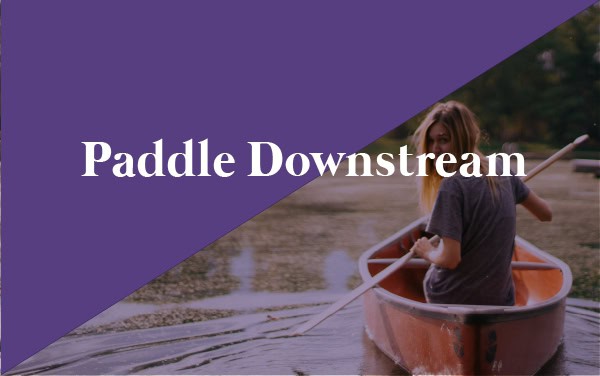
Imagine there is a stream of well-being. Imagine that you show up to the stream with your canoe and you get in. Once you are in, you have two choices, you are either paddling upstream or downstream.
Going upstream requires you to hold on tightly to the oars. It requires you to paddle as hard as you can.
Going downstream requires you to actually stop trying, in fact: you can even let go of the oars, grab a bag of spicy chili mango, and enjoy the view.
The more you go with the flow, the more you allow for the stream of well-being to work for you.
Alright, try not to overthink this, stay with me and let’s apply it to sobriety.
Imagine the stream is your alcohol-free journey. You want to finally get rid of this toxic relationship you have with booze and you are willing to do whatever it takes.
When you are paddling upstream, you are working hard, going to meetings, checking in with your community, not drinking… and that is all amazing. But, what you are also doing, is sometimes getting frustrated because things aren’t going the way you wanted them. “Isn’t life without alcohol supposed to be better? Why am I still having cravings? I shouldn’t be feeling this way. This is hard. I can’t do this. My friends and family don’t support me.”
Anyone felt this way before?
The contrast of this, is paddling downstream. And this is a choice. Yes we have to engage in our attempts, exercise our physical agency to do the things we need to do, like: going to meetings, checking in with your community and not drinking. But how can we practice letting go of the oars and allowing the magic of sobriety to happen to us? When you paddle downstream, you may have negative thoughts and negative feelings – but you deliberately choose to recognize them and then diminish them. For example: you are upset that your friend who knows you are attempting sobriety keeps inviting you to a bar. “Doesn’t he get it? Is that what a good friend would do?” These thoughts are upstream thoughts. You can detect the and do the best that you can to turn your canoe downstream.
How do to do this? Choose a thought that brings more relief than the thought you are already having. Yes my feelings are hurt, yes I am disappointed at my friend. But how can I feel better about the situation vs worse? Maybe you can choose to think: he does not know he is hurting my feelings and perhaps he is struggling since he misses his drinking buddy. Whatever thought you choose to have doesn’t have to be the solution to the problem or the absolute truth, it should simply bring you some sort of relief vs fuel your negative emotion.
Thoughts that fuel your negative emotions (which will inevitably happen to all of us) are upstream thoughts. And thoughts that fuel your positive or neutral emotions are downstream thoughts.
I am not trying to promote toxic positivity, the overwhelming feelings that we experience while on this journey are A LOT. I do want to highlight how much power we have over them though. You can 100% make yourself feel better or feel worse, at any given moment, with the thoughts that you choose. Don’t add more weight to the backpack of sobriety. Focus on feeling good, you are doing something AMAZING for yourself. Keep reminding yourself of that. What you focus on expands.
Who wants to try paddling downstream with me?
Always rooting for you, RE!
xoxo
Odette
by RE Helper | Sep 15, 2024 | Alcohol Relapse, Blog, Early Sobriety, Science and alcohol, Uncategorized
Today’s blog entry is from Dan B. Dan has been a member of Café RE since January 2022. He can be found on our zoom chats and supporting fellow members of Café RE.
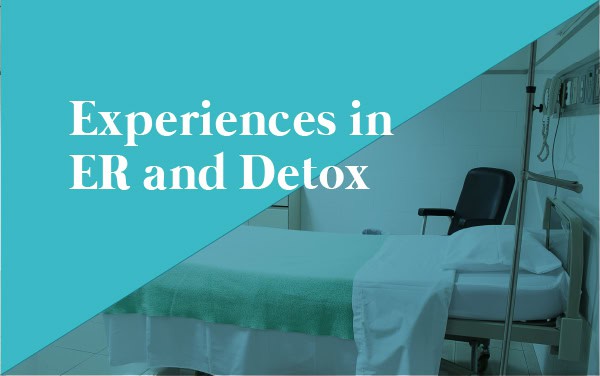
Experiences in the ER and Detox
By: Dan B (Café RE UP)
Both are Brutal & Dangerous: Drinking to that Level and Detox/Withdrawal by Dan B.
I’m hoping that all my experiences in ER and Detox could both be informative and a motivation not to do what I did. I used to drink enough alcohol in a binge over days to the point I was in a panic and my blood alcohol level was at a dangerous level. Alcohol energized me, raised adrenaline and cortisol, then I probably used more for hair of the dog, and for fear of withdrawal – so it all accumulated to a dangerous level, hence ambulance rides (way too many) initiated by my friend or myself seeking a friend or neighbor.
ER Experiences
In the ER, I usually asked for a benzo like Ativan, because I felt in a panic, but at a certain blood alcohol level, they cannot give you it. One time, I think they waited until my BAC was under 2.5; another time, they didn’t give me anything at all. I think I believed I was in withdrawal, but it was intoxication. Having an anxiety disorder probably factors into this.
They hook you up to IV, and put those round stickers on you, is that for heart eval? I should know by now. I think they had something on my other arm sometimes too. Sometimes they told me to keep my arm straight. One time they told me not to move. In some situations, if I got out of my bed, beeps would go off; other times, they didn’t. I was in telemetry at times, which I guess may be extra monitoring.
Various staff would come in at different times to take vitals and such. Nice, caring nurses make a huge difference in states like these. And I always thank them. They would also do a certain scan putting me into a machine, maybe because I sometimes fell before going in. I was often what they call a fall risk, so that’s why they wanted me to stay in bed.
At certain visits, they would attach something for urination. Others I would have that plastic bottle. When I had some anxious energy, I liked to walk around, but they are extremely attentive when you step an inch outside of your door.
I usually asked for a lot of water, but I think at one visit, they didn’t want me drinking too much because I guess it may eliminate some of the electrolytes via IV.
The “Fight” Out
They eventually have a counselor evaluate me via computer, in which she asks at least 30 questions. Between that and a doctor’s call, that determines if they will keep you in for days, transferred to detox. I’ve been there several times, and it’s a process just to get out.
So, in a very challenged, exhausted state, I gave my best to speak well and answer questions the right way. Because I know the decision is ultimately mine about drinking. And when you are in detox for days, you have access to nothing in terms of phone, shaving, makeup, etc. You are in scrubs. In the process of discharge, they will ask if you have support. I always said, “Oh I’m in an amazing recovery group called Café RE.
I usually have nothing in terms of glasses, my wallet, phone, keys. So there was a fear that my doors would be locked though I leave the sliding glass door unlocked a lot. They call a ride for you, and I often left in scrubs and socks. I hated going back because my neighbor often knew about the episode and is very nosy.
When Transferred to Detox (5-9 Days)
I was always pleased when I had my own room in detox, because you never know what your roommate will be like. In NJ, I had a roommate that said, “If you snore – I’m going to put toothpaste up your nose.” I stayed awake as long as possible.
Some of the hospitals for detox were very challenging environments, but you also create special bonds, and we found a way to laugh together. But it also got pretty “crazy” at times. You also hear some very sad stories. But there are also some good workshops.
Self-Detox
This obviously could be dangerous, especially without a benzo like Librium. When I went through alcohol withdrawal at home without the help of a benzo, even after spending half a day to 2-3 days in the ER, I may have had some alcohol a couple of times. But even with that small amount, the reduction was so significant that I still experienced the full effects of withdrawal. And you also have the possibility to tip back over into dangerous excess.
So, in general, here’s what withdrawal was like when drinking vodka at the massive level I did:
There are various alcohol withdrawal symptoms one can get. The first two days are the scariest. Sometimes I vomited throughout the day, from 2 up to 20 times. The dreams on day 2 and 3 (or similar) were vivid and weird in a scary way. And I’m not one to ever get this unless I’m going through this process. Trying to take vitamins caused me to vomit also. It’s strange because you are very tired but have anxious energy. So as a fall risk, I would lay on the couch and move my legs/feet because of the anxious energy.
I would sleep on my side in case I vomited. You don’t want to sleep on your back during this. I often said, “God, please help me.” Then read Matthew Perry also said that. I often did the heart hold with affirmations like, “Daniel, you are going to be OK.” And did deep breathing. I remember in some episodes, I felt like deep breathing a lot still wasn’t enough.
In one episode, I was trying to hydrate but vomiting as well, so I don’t think I was hydrating. I drank Powerade Zero for electrolytes. I sometimes put on the Insight Timer app which has relaxing sleep music. Sometimes I kept playing “Be Not Afraid”, which my long-time friend did during hard times. He’s one of my smartest, biggest hearted friends.
I was weak walking to the bathroom, and would sometimes hold the rail of the shower. Thank God for Google. I would look up things. When I eventually could hold food and vitamins down, I had blueberries and strawberries out. Perhaps broccoli at times. And of course B1 (Thiamine) and Folic Acid. This is standard in this process. The amount they prescribed me for folic acid was 1 mg, B1 varied from 50-100mg according to the notes I’m looking at from two visits.
After 3 days, things get better. After 5 days even better. And after 7 or 8, for me, it was a major transformation. So, this was my experience with and without alcohol after a binge.
It was brutal.