by RE Helper | Oct 15, 2023 | Alcohol Free, Blog, Early Sobriety, Expectations, Nursing, Uncategorized
Today’s blog entry is from Paulette Vantrease, who has been a member of Café RE since July 2023. Paulette has been alcohol free since March 22, 2023 and is active within her Café RE OG community.
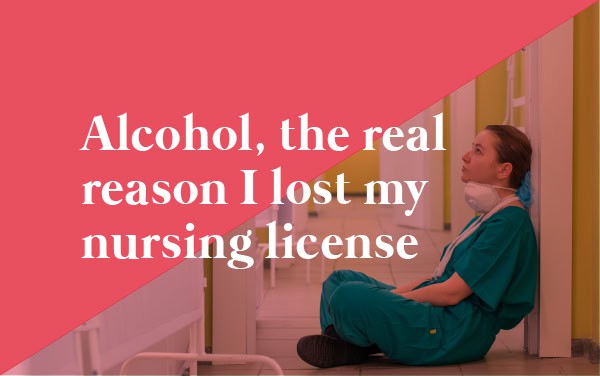
“I blamed covid for leaving nursing, but alcohol addiction forced me when I lost my license.”
I stood on a stage about to give a speech to a few hundred festival attendees, I hated speaking in front of a crowd; I still do. But the topic was about something I knew personally, and I had lived it for many months. I felt a sense of comfort and pride in what I was going to say. Writing the speech and practicing it out loud was cathartic. I hoped I could sincerely convey all the emotions I felt up to and on that day. My head was clear, my heart full, and I was sober for several weeks that day.
On September 11, 2021 I was asked by an acquaintance to speak at a festival. Asked to speak about my experience as a nurse in the emergency department during the pandemic. The worst of covid had passed by then though fear and caution remained throughout our community and much of the country. My focus was on what I saw and lived through in the ER, dealing with non-believers (including a few of my own siblings back home), and the raw emotions felt during and still to that day whenever I thought of those difficult shifts in the hospital.
What I omitted in that speech was my struggle with alcohol throughout the entire span of the pandemic.
As ER nurses…
As ER nurses we deal with people every shift who are at their very worst: mildly or critically ill or injured, in psychiatric crisis, actively dying, and just about everything else you can imagine. We are hardcore adrenaline junkies who thrive on the chaos the department gives us. We willingly work in an environment no one wants to be, most certainly the patients.
The article “Alcoholism and Medical Professionals” states that 10-12% of healthcare professionals will develop a substance abuse disorder during their careers, including 1 in 5 nurses. It also states that the numbers are likely even higher due to vast underreporting. Drinking is the norm after a shift, most certainly after a particularly difficult one. Us night shift workers would often leave the hospital in the morning to go have “breakfast” at a local restaurant that served alcohol after 8:00 am. Food was often only an option.
To say alcoholism is rampant among healthcare workers, especially those in critical care areas, is an understatement. Alcohol is an easy outlet to numb the mind and body after desperately trying to save a young car crash victim only to watch him ultimately slip through your fingers. For me personally, drinking became my daily therapy session.
My first successful attempt at sobriety began in late May 2018.
I had been drinking daily and much to my shame and guilt even before work to feel somewhat normal. As William Porter describes in his book “Alcohol Explained,” our brains are essentially hijacked by alcohol and eventually we need to drink in order to simply function normally. It had got to the point where unless I drank my anxiety was unmanageable. I would begin to withdraw from the effects of alcohol. And eventually withdraw I did. Hard.
As a nurse I took care of detoxing patients and knew all too well how dangerous it could be. So, on a trip out of town with a dear friend that May afternoon the symptoms began on the car ride and though I was completely in denial, I could not get to a hospital fast enough. It scared me shitless. In the ER as my blood pressure read 200s over 100s and my heart rate 180+, I admitted to the doctor that I had been on a very long bender and stopped cold turkey a few days prior. When he ordered 2 mg of Ativan, I believe the relief on my face was visible to everyone in the room, and as it entered my veins the calming effect was almost immediate.
I could not deny any longer what was happening.
The phrase “scared straight” entered my mind and stayed there for a very long time. Looking back on and remembering the physical symptoms of withdrawal kept me sober for over 20 months. In the hospital I was diagnosed with cardiomyopathy, had a cardiac catheterization, and put on a regimen of medications for my heart, blood pressure, and lingering withdrawal symptoms. I entered an outpatient program and went to my very first AA meeting. One would think that all of this would have kept me sober for the rest of my life. But sheer determination without any plan in place only lasts so long.
Complacency in sobriety is like a bomb waiting to go off, and mine was ticking away the hours. For months I had been planning a dream vacation to Hawaii. I was set to go in early 2020. By then I had stopped going to AA blaming it on work constraints and subconsciously knew that I would drink there. The memory of detoxing had faded and the trip of a lifetime by myself was meant to be epic. The relapse there was epic as well. Queue explosion.
When I returned from Hawaii covid had begun to make waves as an up-and-coming new deadly virus. I had reached out to an old AA friend and somehow got back on track into sobriety. It didn’t last long. Covid hit with full force along with my drinking. I had countless attempts at sobriety throughout the pandemic however I simply could not sustain any stretches for long. It was a very dark time period for so many people including those of us trying to get and stay sober. Looking back, it is a blur of dying patients, daily chaos, uncertainty, and alcohol to numb it all.
In the summer of 2021 I was introduced to an online community called, “The Luckiest Club”. By then I had given up on AA but knew I needed something, anything to help me get sober. The spiral down to daily drinking had its grasp on me and I was completely powerless. TLC was like a breath of fresh air for me. I had heard of different types of recovery programs such as SMART recovery, Sober Sis, Recovery Dharma, and the like. But this was unique, and I immediately fell in love with the forum. I attended the online zoom meetings, joined subgroups that interested me and began to raise my hand and speak in meetings, which I never did in AA. I was sober again and felt incredible.
During the speech I gave that September day in 2021 all the emotions and memories of covid came crashing back. A state politician was there listening to me and stopped me as I was leaving to thank me for my service. He said you could hear a pin drop while I was on the stage which at a music festival was quite the feat. Several other attendees thanked me, shook my hand, and even hugged me. In hindsight I knew I should have reached out to someone, anyone from TLC or AA or my friend who drove me to the hospital back in 2018. Instead, I ended up at the liquor store. I got obliterated at home. The old wounds were ripped open, raw, and I wanted to eliminate the pain. STAT.
The rest of 2021 and 2022 was a continuous cycle of drinking. I was depressed. My drinking made my depression worse. I tried numerous times to quit and even had a few stretches of sobriety interspersed. By then I had lost my nursing job and my license due to alcohol and was floundering with what to do with my life. In spite of admitted to a psychiatric hospital a couple of times for suicidal ideation the drink had me in its grasp. If there was a rock bottom, I think I hit it more than once.
I took my last drink on March 22, 2023. The same day, I was admitted to the psychiatric hospital. I didn’t have a job. I was living with my son drinking away the days, foolishly thinking I was cleverly hiding it from the world. Upon my release I rejoined TLC, attended as many meetings there as I could, and immersed myself in reading and re-reading books such as “Quit Like a Woman” by Holly Whitaker, “Alcohol Explained” by William Porter, “This Naked Mind” by Annie Grace and several others. I recently began listening to podcasts and joined Recovery Elevator as well. I now listen to several a day. Paul Churchill’s interviews on the Recovery Elevator Podcast are my new daily therapy. I place more tools in my sobriety toolbox as I discover them.
Today, October 15, 2023, I am 207 days sober, and it is the longest stretch since 2020. I have found community and fellowship in TLC and Café RE. I have reached out to other members and met them in person. We text or talk on the phone, or message each other on the forum. I have a therapist who specializes in addiction who helps to guide me along in this journey. What the future holds or if I will remain sober, I do not know. I am unsure if I will, or even can, return to nursing. As cliché as it sounds, I take one day at a time. Everything feels right though, as if the universe finally put everything in place, and it feels amazing. It IS amazing.
Peace, Love, & Joy
Paulette
by Kris Oyen | Oct 2, 2023 | Podcast
Podcast: Play in new window | Download
Subscribe to the Recovery Elevator Podcast Apple Podcasts | | More
Episode 450 – What are Alcohol Withdrawals Like in the First Week?
Today we have Sarah. She is 46 and lives in Buckhannon, WV. Sarah has been alcohol free since December 15, 2022.
Our latest Ditching The Booze course begins tonight at 7:30pm EDT/4:30pm PDT and it is not too late to register. The 5-week course is called Writing a New Narrative and is designed to help you explore your sobriety story through journaling and writing prompts and it is free for Café RE members.
Cafe RE – Use the promo code OPPORTUNITY to waive the set-up fee.
Exact Nature: https://exactnature.com/RE20
[02:23] Highlights from Paul:
We are four weeks into our ten-episode Q & A series and today’s question is “what are alcohol withdrawals like in the first week?” This question as asked by Robyn in Café RE Blue.
The answer to this is going to depend on how much you drink on a daily or nightly basis and it’s not a one size fits all answer.
I highly recommend detoxing under medical supervised care if you consume more than 6-8 drinks daily and have been doing so for several months or years. Quitting cold turkey can be life threatening. 72 hours is the magic number. Once you hit this number, the worst of the physical components are behind you.
Paul shares some tips for navigating the first week and shares some of the changes our bodies go through. The whole withdrawal process from one week to several months has a term called PAWS or post-acute withdrawal symptoms. Check out the YouTube video Paul did about this.
Thank you, Robyn, for the question, if you want a question answered on the podcast, send your questions to info@recoveryelevator.com.
Better Help: www.betterhelp.com/elevator – 10% off your first month. #sponsored
[13:41]: Kris introduces Sarah:
Sarah currently lives in West Virginia, works in higher learning, and has two daughters and three stepchildren. For fun Sarah enjoys arts and crafts, DIY things, and enjoys plants.
In high school, Sarah did not drink but grew up around a lot of drinking by her extended family. She never saw anything negative about it. In her early twenties she joined the Air Force where drinking is prevalent. At one point she had a few friends approach her about her drinking to which Sarah took offense. Over the course of the next several years she continued to drink the same way. Despite small consequences, she didn’t feel like she had a problem.
Around 10 years ago she and her husband were in counseling. She stated in a session that she needed some help and went to rehab after which she was able to stay sober briefly. Sarah says she got a lot out of her time in rehab. For a short period of time Sarah was able to drink moderately, but it increased after a series of negative life events. She started noticing the negative side effects of heavy drinking physically and emotionally.
When Sarah got sober this time, she knew she needed to join a community, and someone recommended Café RE to her. She has made great friends since being there and feels like this time in sobriety has been easy and she earned for it to be.
Sarah’s plan for recovery moving forward: to keep doing the work, attend more chats and start thinking about how to serve others.
Sarah’s parting piece of guidance: talk about it and reach out with others that have similar experiences.
[59:20] Kris’ closing:
One last reminder that Thursday October 5th is the Recovery Reinvented conference. In person and online attendance is 100% free.
Fall is here and Kris is ready for it. He reminds us all to get out there and play. Do all the fall things. Slow down, take a breath, and enjoy the moment you are in.
Instagram – We regularly feature content here – often with goats!
Recovery Elevator YouTube
Sobriety Tracker iTunes
You’re the only ones that can do this RE, but you don’t have to do it alone.
I love you guys.
by Kris Oyen | Aug 28, 2023 | Podcast
Podcast: Play in new window | Download
Subscribe to the Recovery Elevator Podcast Apple Podcasts | | More
Episode 445 – Keep Dancing
Today we have Cindy. She is 54 from Kure Beach, NC and took her last drink on March 2nd, 2023.
We are doing an East Coast Café RE meet-up tour! NYC on Wednesday August 30th, Philadelphia Saturday September 2nd, and DC on Tuesday September 5th. For questions about the event please email info@recoveryelevator.com
This is a reminder of the suicide prevention hotline 988, which was launched one year ago. This number has fielded 5 million calls, texts, and chats in the past year alone and has saved countless lives.
We have partnered with Sober Link. You can find some tips and can sign up for a $50 off promo code.
[03:23] Highlights from Paul:
After recently watching a social media video featuring a sober influencer dancing, Paul decided to challenge this individual to a breakdancing battle. Meanwhile another sober influencer viewing this video stated that watching this video made him want to drink.
Let’s zoom out for a second.
The Tik Tok user, with millions of followers, said that watching videos of this person dancing – made them want to drink. To summarize that in two words it would be: Stop Dancing.
Then we have Paul who challenges this person to a sober break dance battle. We can summarize this statement in two words: Keep dancing.
So, listeners, keep on dancing, and never stop. If you don’t know your metaphorical or literal dance steps, stick around. The knowledge will return. If someone tells you that your dancing makes them want to drink, then that is 100% their problem. When you dance, it gives others permission to dance. You don’t need alcohol, it won’t make you better, and you’ll remember all of it.
Better Help: www.betterhelp.com/elevator – 10% off your first month. #sponsored
[08:52] Paul introduces Cindy:
Cindy is 54, grew up in Maryland but currently lives in North Carolina. She has been married for 23 years and they have two children and a dog. She works as an operating room nurse and recently got a master’s degree.
Cindy recalls first having alcohol late in high school. She was very social throughout college and enjoyed drinking a lot. She traveled a lot after college and knows that she drank but didn’t have any major consequences. Cindy says she and her husband drank but she doesn’t recall it affecting her life much. Happy Hour after work was very common for her due to the stressful job she has. Even after an incident where she was able to get out of a DUI, she still didn’t recognize that she had a problem. The drinking increased but Cindy always thought it was her husband that had the problem, not her. There were no attempts to moderate and no consequences, so the drinking continued.
Cindy started wondering why she wasn’t happy because she had a good life. Since she felt it was her husband that had the issue, Cindy started attending Al-Anon. When she returned from a travel nursing job, she realized how terrible she was feeling. She had been drinking every night, driving drunk often, and started having some consequences. Soon she found herself in an AA meeting where she had what she considers an awakening of sorts. She felt like she had found people that understood her.
Earlier this year, a podcast episode Cindy was listening spoke of living an authentic life. This really resonated with her, and she realized alcohol had to go. She started attending AA regularly after her last drink and is learning to deal with her feelings and learning from them. Cindy utilizes many tools to process how she feels and knows that alcohol is not the answer.
Cindy’s favorite resources in recovery: recovery podcasts, being active in AA
Cindy’s parting piece of guidance: If you are contemplating stopping drinking, think about why you are drinking.
Cafe RE – Use the promo code OPPORTUNITY to waive the set-up fee.
Instagram – We regularly feature content here – often with goats!
Recovery Elevator YouTube
Sobriety Tracker iTunes
Recovery Elevator
I love you guys.
Go big, keep dancing, because eventually we’ll all go home.
by Kris Oyen | May 15, 2023 | Podcast
Podcast: Play in new window | Download
Subscribe to the Recovery Elevator Podcast Apple Podcasts | | More
Episode 430 – Walking Into Summer
Today we have Joss, she’s 34 from the Bay Area and took her last drink on December 21st, 2022.
We still have room in our upcoming flagship retreat which takes place August 9th through the 13th in Bozeman, Montana. This event is all about having fun, connecting, and learning the tools needed to be successful on your Alcohol-Free journey. You can find more information here!
[02:21] Thoughts from Kris:
Spring has finally arrived in North Dakota!
With the changing seasons, it’s not uncommon to experience some different emotions surrounding our recovery. More outdoor social activities and parties can bring some unique challenges.
We sometimes worry what others might think about us and our choice not to drink. The phrasing “I care what people think of me” makes me feel a bit middle-schoolish, but humans long for connection and community. We are not really fearing the event so much as fearing that we don’t belong. Creating accountability with people we trust can help us navigate these times, and sometimes just passing on the event may be what we need to do for the time being.
Stay tuned for more tips gathered from our members at Café RE after the interview!
Better Help: www.betterhelp.com/elevator – 10% off your first month. #sponsored
[09:45] Kris introduces Joss:
Joss is 34 and lives in the Bay Area. She has two cats, is a hairstylist and enjoys running. She recently celebrated three months alcohol free.
Joss grew up in a very strict and sheltered Christian household. Her parents were very active in the church, and they spent a lot of time there and went to a private school. Joss first tried alcohol when she was 14 and her drinking increased a lot in high school. She battled with depression and never felt validated by her family, and they just pushed her toward God and church without giving her much opportunity to explore anything else. She jumped around schools a few times due to suspensions and expulsions.
She didn’t consider her high school years as being rebellious but more as a time to explore things outside of the sheltered life she was raised in. She really enjoyed music and started a band in high school.
Joss moved to New York after her mother suddenly passed away and says that time was when things got out of control. She reflects that a lot of the things she did while drinking too much could have ended very badly. Joss was dating someone who also drank heavily, so it quickly was their lifestyle. Eventually she grew tired of life in New York, broke up with her partner and moved back to the Bay Area where she continued to drink.
Dealing with the death of her mother was hard on Joss. She got settled into a friend group after moving home and they all partied a lot. She was working in the restaurant industry and found herself drinking before and after her shifts and progressed even more during the pandemic. During that time, she was starting to listen to podcasts and become sober-curious. After a particularly bad morning-after from drinking too much, she realized that enough was enough.
The first month of quitting found Joss staying sober through multiple triggering events.
Her advice to others is if you feel like there is an event or reason that you don’t think you can quit drinking now – there will always be a reason to wait. Instead of waiting – just go for it!
Since quitting, Joss enjoyed going to AA and having that community. She has also found some groups online that she enjoys. She finds that stocking her fridge with alcohol-free drinks, sharing her intentions with her friends and leaning into comfort of all kinds is the key to her success. For Joss, all her relationships have improved, especially the relationship with herself.
Cafe RE Use the promo code OPPORTUNITY to waive the set-up fee.
Recovery Elevator YouTube
Sobriety Tracker iTunes
Recovery Elevator
You’re the only one that can do this RE
But you don’t have to do it alone
I love you guys.
by RE Helper | Apr 16, 2023 | Alcohol Free, Blog, Mocktail, Recipe
I hope I’m not disappointing my 4 readers (hi Roxanne, Robyn, Kerri and Trisha!) No mocktail recipe this month. But I will throw in my favorite homemade ice cream recipe as of late for a little change up. Lately my mocktails have been top secret as I’ve been writing...