by Paul Churchill | Mar 6, 2019 | Blog, Expectations, The first Year
By Claire O’Brien
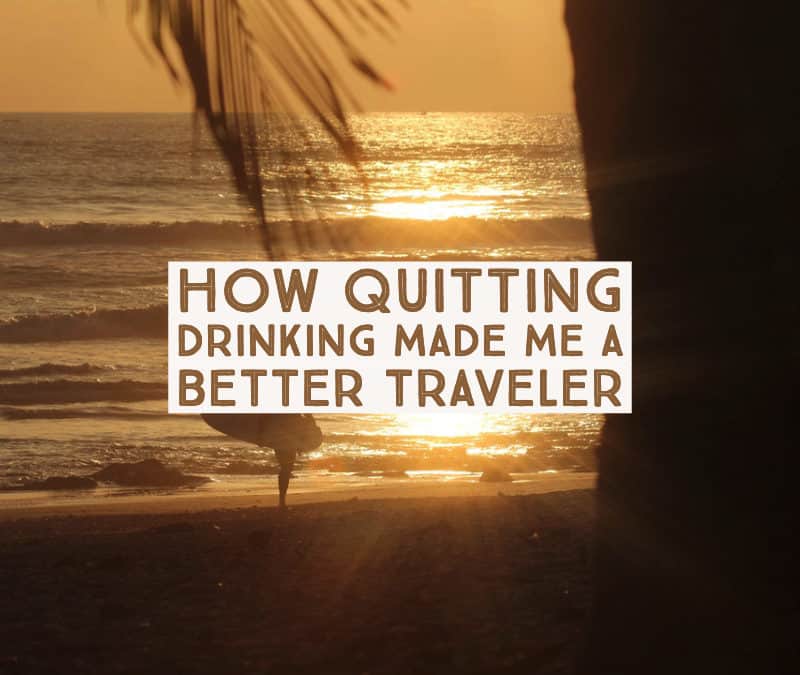
A few months before I quit drinking for good, the husband and I stole a few days to lounge on the sand at the Delaware Shore. It was September, and the air was still warm but the crowds had thinned, leaving us the wide beaches to ourselves.
We had three entire days to soak up the sun and watch the dolphins dart among the waves. So, I was pretty annoyed to wake up one morning so hungover that I had to grit my teeth to force myself to face the day.
A few precious days that we’d paid a lot of money for, which I was now just trying to survive. At brunch, I’d order coffee (obviously), and avocado toast (healthy!) and make chit-chat with my husband about how to spend the day. He might not notice, but I’d be distracted, hardly present at all, because mentally I’d be berating myself for swilling that extra glass of red wine, again.
Maybe I wasn’t the biggest drinker you’d have ever met. But, I definitely had a habit, and it was getting old. Frankly, so was I. How many days traveling over the last 20 years had I wasted from overindulging? I couldn’t even guess.
But, what’s traveling without drinking anyways? Swilling pints of lager in cozy London pubs. Pounding shots of rakija in Croatia. Sipping wine with every meal in France. Spilling sticky cups of rum and cola on the dance floor in Belize. And a personal favorite, guzzling margaritas from a can in Mexico. Traveling means experiencing life to the fullest! That means alcohol. And lots of it
Less than a year later, I was back in Rehoboth Beach for my 2-year wedding anniversary. This time, I was six months into my post-alcohol experiment. I booked a B&B, famous for its waffles in the morning and free wine in the evenings
Immediately, my mind flooded with anxious thoughts
“How can I travel without drinking?”
“How can I celebrate my anniversary without alcohol?
and most urgently, “But…free wine!”
Then I remembered that I once celebrated a trip to the grocery store with wine. So…maybe my excuses are still pretty flimsy
It rained all three days in Rehoboth Beach on that trip. I didn’t drink. It was totally fine. In fact, it was much more than fine. I spent too much money on used books and antiques. We took the ferry over to New Jersey and explored the Victorian town of Cape May. We ate fresh seafood. I challenged the waiters to bring me “the funnest” non-alcoholic drink they could invent

Instead of being a liability, I woke up early to research activities. I assumed the podcast DJ duties on the drive. I made ridiculous observations intended to make the husband laugh. When I returned home content and invigorated, rather than depressed and full of regrets, I conceded that perhaps I really was onto something.
Traveling without drinking is not only possible…but dare I say, preferable? Before you shriek “Heresy!” hear me out
Since that Delaware trip, I’ve spent several weeks in Scandinavia. My birthday fell during a 7-day work trip to Las Vegas. I spent a luxurious weekend in a Pennsylvanian resort and survived many visits home to California. I just returned from a week in the Netherlands. All accomplished without even one cheeky drink.
I’ve met other people that don’t drink while they’re busy exploring the globe. Some just don’t like it, some want to save money, and others were in recovery. At an afterparty in Rotterdam recently, my new friends hardly touched a drop of booze, just because! I’ve realized that traveling without drinking isn’t really about abstaining from this magical liquid worshiped the world over, but about feeling empowered to make decisions that work for you.
As a regular drinker, even if you don’t have an obvious problem, the ritual begins to make your world smaller. It’s imperceptible at first. Weekends might involve having a few drinks with friends. Soon, the two become completely intertwined. Next, your brain wonders,
“How can I even hang out with the girls without drinking?”
“Is it possible to attend this wedding without toasting with champagne?”
“How will I visit Scotland without sampling a few drams?”
“How can I survive Tuesday?”
In some ways, my lengthy travel resume, with its regular doses of the unfamiliar, prepared me for this new life sans alcohol. What’s more uncomfortable than quitting a 20-year habit, especially one that is both so soothing and socially encouraged? If the point of travel is to escape the ordinary, experience our differences, and push against the boundaries of what’s comfortable, then quitting drinking has, in fact, also made me a better traveler.
I’m more adventurous than ever.
I’ve always considered myself a risk taker. But that quality didn’t extend to my drinking ritual, which was really more of a drinking rut. Now, every restaurant, city, and country is an opportunity to sample the new. Frothy glass of hot pink dawet at a Surinamese restaurant in Amsterdam? Sure! Traveling in Sweden was a delightful surprise. I found an extensive non-alcoholic wine and beer list on every menu, none of which I would have glanced at before.
My adventurousness even extends beyond my drink choices. One random evening I came up with the idea that I should fly to every international destination served by a direct flight from Washington, DC. And write about it. Then, more astonishingly, I actually started doing it.
I’m more flexible.
Previously, every evening ended with drinks, with few exceptions. Now, experiences of all kinds are crammed into my days. In Las Vegas, I spent the evenings visiting the museums and aquariums. I splurged on fancy tasting menus and rented a vehicle to explore the desert. On a whim, I rode in a drift supercar around the Las Vegas Speedway. It was harder to be spontaneous when I was preoccupied with where I could buy wine on Sundays and wondering if I had remembered to pack my corkscrew.
I’m more responsible.
I was the type of drinker that managed to get shit done. But I was still just managing. Once, because I was so disorganized, my debit card was declined while attempting to buy a single stick of deodorant. I was 35 years old. Now, my kitchen is clean. All the dogs and humans in my house are current on their medical appointments. And there are probably fewer than three empty coffee cups floating around my car. I have a savings account dedicated solely to travel, which I diligently contribute to monthly. All trips get paid for in cold, hard, cash.
I have piles of money.
Ok, I’m not exactly stacking bricks of cash, but booze is expensive, especially when you are consuming it with the frequency I once found refreshing. Since my travel fund isn’t being depleted quite so rapidly due to lengthy pub sessions, I’m able to spend more on quality experiences. Like upgrading to Economy Plus!
I have more fun.
Ironically, I’m more outgoing and social since giving up the hooch. The dark cloud that followed me around gradually evaporated, making a cheerful and upbeat mood my default personality. Who knew? Now I’m the person planning adventures, not bailing on invitations at the last minute. I’ve instigated weekends away for welding classes, white water rafting, tree climbing courses, and exploring Jamaica while encouraging friends and family to join me.
I’ve become more resilient.
It didn’t happen overnight, but I developed healthy* coping techniques for stress, boredom, and all of the feels that I don’t like. Things still go wrong when I travel. In Richmond, the husband got food poisoning courtesy of a dodgy roadside gyro. In Sweden, it was an AirBnB fiasco. In Las Vegas, I mysteriously scratched my cornea and required medical attention. Now it’s easier to figure out what I need to do next without requiring an entire bottle of wine to cope.
Note: *Debatable if coconut ice cream with Magic Shell chocolate topping qualifies as healthy.
I’m more authentic now.
Confronting my worst habits and the role my ego played in prolonging the behavior was a humbling experience. The process of building new habits in their place, however, has grown my confidence. Also, without the daily dose of self-loathing, waking up every day as myself isn’t so bad. I don’t have to present as anyone else or hide parts of my life of which I’m ashamed. So, I’m able to more sincerely connect with people both at home and while traveling. Since I’m less distracted by my own internal dramas, I’m more interested in getting to know you.
I’m also less judgemental.
Like most well-traveled people, I considered myself to be very open-minded. Conversely, like most drinkers, I distrusted people who didn’t drink! I viewed cultures and customs that didn’t embrace alcohol with extreme skepticism. Now, that’s no longer an issue, which has opened up parts of the world and experiences I wouldn’t have seriously considered before. (Seven-day silent meditation retreat, no problem! Well…)
My life is bigger.
Probably not a coincidence, but around the same time I gave up alcohol, I completely restarted my professional career from one in the sciences to a more creative field. Five years ago, my options seemed few, and now I’m limited only by the hours in the day. Because there’s less holding me back, there’s much more space to move forward. Opportunities seem to be present everywhere. Travelling has become less of a selfish pursuit of simply accumulating more countries. Now it’s more of a shared experience, of learning, of inspiring myself and connecting with others.
Sure, there’s the occasional pang for the experiences I’ll miss. I’m human.
My brain sends up random flares like, “I might want to go to Tokyo next year. Clearly, this will be impossible to do and not drink sake.”
It’s a little bit like having a fleeting thought about an old lover. For a brief moment, the fantasy, the “What if?”, is seductive.
“Don’t I deserve some fun? Let’s be exciting and a little dangerous!”
It’s also the perfect way to create a total dumpster fire out of this otherwise satisfying life I’m building.
My love of travel stems from life’s possibilities. Endless combinations of routes to plan, experiences I haven’t had, people I haven’t met, and future memories I’ve yet to make. It’s not such a sacrifice for me to skip a few cocktails when the payoff could be so much bigger, and bolder. When I finally put down that drink, I found that I held a nonstop ticket to the rest of my life, and I want to see where it goes.
Additional blog posts by Claire O’Brien can be found at her webiste the Virgin Colada.
by Paul Churchill | Feb 25, 2019 | Podcast
Podcast: Play in new window | Download
Subscribe to the Recovery Elevator Podcast Apple Podcasts | | More
Juan, with a sobriety date of May 29, 2018, shares his story.
Congratulations to Kirk S. in Florida for hitting 1 year of sobriety.
This Friday, March 1st, registration for the Recovery Elevator Retreat in Bozeman goes live. Space is limited for this retreat. You can find more information about events here
After the interview with Juan, Paul will discuss detoxing from alcohol and how dangerous it can be.
Paul talks about cravings. What they are, what they represent, and what to do when we experience them. Also, are all cravings the same? In simple form, a craving is a desire to regulate our inner state with an external substance or behavior.
SHOW NOTES
[9:25] Paul Introduces Bill.
Juan, with a sobriety date of May 29, 2018, is 32 years old and is from Los Angeles, CA. He is a personal assistant, and single. For fun Juan likes to play music (he is in a band), go to the movies, hike, workout.
[10:25] Give us a little background about your drinking.
Juan started drinking at the age of 19 to ‘fit in’. He had recently come out as a gay man and drinking helped him feel more confident and comfortable in his own skin. Touring with his band all over the country and world, drinking was the way he got rid of his performance anxiety. Around age 25 things started to get messy. Towards the end of his drinking his anxiety was through the roof.
[13:25] Tell us more about your anxiety.
At first drinking would calm his anxiety, but once he ‘went over the threshold’ he would start to get paranoid. The worst part was the fear he would have when waking up in the morning. His self-esteem was at an all time low. In May of 2017 Juan hit this internal rock bottom, got into a horrible physical altercation with a friend and knew something had to change.
[18:35] Walk us through what happened after May 27, 2107.
He went through a ‘dry drunk’ stage. He just stopped drinking, started avoiding going out, avoiding certain people and situations. It wasn’t easy and he was not feeling the benefits right away. He felt like he was on a diet and depriving himself. He did this for about 4 months and then felt like his relationship with alcohol had changed, and he decided to drink again. By his birthday in February his drinking was back to where it was when he quit.
[22:15] Continue from where you are back to drinking and your anxiety is back.
On May 28, 2018 he decided to try sobriety again. This time he would do it differently. He started to read books and watch movies about alcoholism. After about a month and a half, and at a friend’s suggestion, he went to his first AA meeting. Although he was nervous and uncomfortable, he immediately felt like he found what he needed. He got a sponsor and attends about 4 meetings a week.
[25:20] Tell us about your first AA meeting.
His first meeting was very small and intimate. It was a lot to take in and he left thinking he would go back, but still feeling confused. He continued going once a week for a while, ducking in and out, until it felt more comfortable.
[26:40] What advice do have for someone that is saying there is no way they could go to AA?
If you are open and ready AA can work for you.
[29:10] Walk us through a typical day in your recovery.
Juan wakes up earlier, prays, makes a gratitude list, goes to work, 4 evenings a week he catches an AA meeting. Everyday in sobriety is different but he tries to something of service for someone every day. He always tries to keep connection with someone throughout the day.
[31:40] What has been the biggest hurdle you have had to overcome in the past 7 ½ months?
It has been in just that last few weeks, he is transitioning out of his job that he has had the 9 years. It’s the first time in 9 years he is unsure about where he will be working. Although it is a scary time for Juan, he feels a lot calmer than he thought he would and is taking it one day at a time. He doesn’t think he would’ve been able to handle this situation before sobriety.
[35:05] What was harder, coming out of the closet as a gay man, or coming out of the closet as an alcoholic?
Definitely coming out of the closet as an alcoholic.
[37:15] What is it like playing music and being on stage in sobriety?
At first it was difficult because of stage fright. But now being nervous and being in the moment is a good thing.
[40:08] What have you learned about yourself in this journey?
He is more confident and enjoys people more.
[41:15] Rapid Fire Round
- What is your favorite guitar rift to play?
The intro rift in Smashing Pumpkin’s – Today
- What was your worst memory from drinking?
The fight he got into with his friend.
- Did you have an ‘oh-shit’ moment?
Coming home with friends in an Uber and feeling so alone and desperate.
- What is your plane moving forward?
Continuing with his step work, finding new sober friends and hopefully finding a whole new career.
- What is your favorite resource in recovery?
AA is the go-to for me.
- Regarding sobriety, what is the best advice you have ever received?
Letting go of control.
- What parting piece of advice can you give to listeners?
Contrary action, doing what you don’t want to do.
- You might be an alcoholic if…
Your bandmates on tour lock you in a basement because you are that out of control and everyone is scared of you.
Upcoming retreats:
Bozeman Retreat – August 14-18, 2019
Asia Adventure – January 20-31, 2020
You can find more information about these events here
Resources mentioned in this episode:
Connect with Cafe RE– Use the promo code OPPORTUNITY for your first month free
Sobriety Tracker iTunes
Sobriety Tracker Android
Sober Selfies! – Send your Sober Selfie and your Success Story to info@recoveryelevator.com
“Recovery Elevator – It all starts from the inside.”
by Paul Churchill | Feb 18, 2019 | Podcast
Podcast: Play in new window | Download
Subscribe to the Recovery Elevator Podcast Apple Podcasts | | More
Bill, with a sobriety date of October 8, 2018, shares her story.
We want to thank Mike Null for his commitment to doing the podcast show notes for the previous 35 episodes and welcome Kerri, from California, to the position, who will take over doing the next 26 episodes.
We still have a couple spots left for our Nashville event coming up this February 22 – 24. Registration for Bozeman Retreat will open up on March 1, and registration for our Asia Adventure will open up on July 1. You can find more information about events here
Paul shares the news he is writing a book, which he hopes to launch by July 1. As that date gets closer, he will be asking for volunteers to be part of the launch team so be on the lookout for that opportunity if that is something you would like to be a part of.
After doing something long enough some trends start to appear. In Ep. 52, after 1 year of podcasting, Paul did a summery of what he learned during the 1st year. In this episode he will cover the 4 themes that people successful in sobriety have fully embraced.
- Community
- Accountability
- Thinking
- Trust
SHOW NOTES
[10:15] Paul Introduces Bill.
Bill, with a sobriety date of October 8, 2018, is 49 years old and is from northern New Jersey. He does investment research for an insurance company. Bill has been married for a little over 20 years and has two kids. Bill finds fun in outdoor activities such as camping and fishing.
[12:56] Give us a little background about your drinking.
Bill started drinking at an early age and drank all throughout college and through his 20s. He got married, finished grad school, their daughter was born, and things seemed fine. Although he was drinking during this time there was nothing significant that made him feel as if he had an alcohol problem. His son was born in 2005 and there were complications. They soon realized his son was not meeting his milestones or developing like their daughter had. When his son was 14/15 mos. old, after watching a Home Improvement episode about a family with 4 autistic children, they just knew what their son’s problem was. The day that the doctor confirmed their fears is the day that Tom feels he became an alcoholic. That was in 2006 and when the progression started.
[18:53] When did you decide you needed to evaluate your alcohol consumption?
Things started to unravel for Bill in April of 2017. After a mini-breakdown and a call to a sister, who called their father, an intervention was set up. He started seeing a counselor who was the only person he was honest with, including himself. At this time, he was not drinking, but white knuckling it. By May he was drinking again. He tried moderation and no matter what he tried it always failed.
Fast forward to October 8, 2018, at the gym Bill pulls up podcasts, types in alcohol addiction and finds the RE podcast for the first time.
[29:30] When did you finally get honest with yourself?
The point of surrender was driving home the evening of Sunday, October 7th. He finally said he had had enough.
[32:34] Who are the first 3 people you ”burned the ships” with?
The first person he told was his best friend. The second person he told was his cousin, who actually confronted him about his drinking. The third person was the most difficult. That was his wife and that was just two weeks ago.
[38:36] Back to October 8, what were the things you put in place to get you to 90 days?
The first few weeks he broke his days into 3 parts, the mornings, the afternoons, and the evenings. All he was wanting to do was make it through the day to make it to bed. The biggest differentiator is instead of pushing the cravings away he acknowledges them.
[43:00] Talk to us about the progress you have made in accepting your son for who he is.
He has gone from the feelings knowing that his son wasn’t going to be the baseball star to now recognizing the potential he does have. His son has made great strides. He tries to live in the present and not look too far into the future and celebrates his son’s accomplishments daily.
[46:00] Rapid Fire Round
- What was your worst memory from drinking?
When his daughter wanted to watch the first Star Wars with him one Sunday night and he drank so many Vodka Cranberries during the day that he got violently ill after the 1st five minutes of the movie.
- Did you have an “Ah-Ha” moment?
The mini-breakdown I had in April 2017.
- What is your plan moving forward?
Reminding myself that I need to make progress each week and I can’t be complacent.
- What is your favorite resource in recovery?
Recovery Elevator podcasts.
- What’s the best advice you’ve ever received (on sobriety)?
Burn the ships.
- What parting piece of advice can you give to listeners?
Alcohol is but a symptom.
- You might be an alcoholic if…
Your 14 year old daughter says to you, at 10:45 in the morning, “Hey Dad, aren’t ya hitting the bottle a little too early?”, and you simply ignore her and walk away with the glass of wine in your hand.
Upcoming retreats:
Bozeman Retreat – August 14-18, 2019
Asia Adventure – January 20-31, 2020
You can find more information about these events here
Resources mentioned in this episode:
Blinkist
This episode is brought to you in support by Blinkist. Right now, my listeners can try Blinkist for free. Visit
blinkist.com/elevator for your seven day free trial.
Connect with Cafe RE– Use the promo code OPPORTUNITY for your first month free
Sobriety Tracker iTunes
Sobriety Tracker Android
Sober Selfies! – Send your Sober Selfie and your Success Story to info@recoveryelevator.com
“Recovery Elevator – It all starts from the inside.”
by Paul Churchill | Feb 11, 2019 | Podcast
Podcast: Play in new window | Download
Subscribe to the Recovery Elevator Podcast Apple Podcasts | | More
Crystal, with 84 days of sobriety, shares her story.
This is a special podcast episode! It marks 4 consecutive years of podcasting…208 straight Mondays in a row.
Paul talks about how Recovery Elevator and the RE community has saved his life, and shares ways we can all help others stop drinking.
SHOW NOTES
[11:00] Paul Introduces Crystal.
Crystal has been sober for 84 days and lives in San Antonio, Texas. She is a life style/transformation coach. She is 30 years old and recently single. For fun Crystal likes to workout.
[12:56] Give us a little background about your drinking.
Crystal considered herself a binge drinker. She tried to moderate her drinking by only drinking on the weekends, as her drinking was starting to affect her work and relationships, but that led to going hard core on the weekends.
[15:00] When did you first realize you had a problem with alcohol?
That was a couple of years ago when she realized she didn’t drink like other people. She always wanted more to drink, always wanting to be buzzed or drunk. One drink was never enough. It was in 2018 that she realized that she really had to make a change.
[19:38] You started your sobriety journey in January 2018, walk us through that.
She became sober curious in January 2018, but feels like it didn’t stick at that time because she wasn’t doing it entirely for herself. She was sober for a few months but eventually lost her “why” and fell back into her old habits. There was a moment in 2018 that she felt like she had no control and that was a scary moment for her.
[21:33] Do you feel like there were times in the last year that you were running on willpower alone?
She definitely thinks it was on willpower alone and was trying to do it on her own.
[24:04] You mentioned when you first got sober you didn’t think of it in terms of being sober the rest of your life, talk about that.
She thought it was going to only be a temporary thing and that she would learn how to moderate it. She realized that she couldn’t moderate it, that only having a one or two drinks would never be enough.
[26:13] What did you change 84 days ago?
The first couple weeks were difficult for her. She got connected with friends at church and let her family know. She shifted her focus and became really honest with herself.
[30:11] What have you learned about yourself in these last 87 days?
She learned she could have a personality without being drunk. She learned that she could have fun and accomplish a lot more without being drunk.
[31:48] Why do you think you drank?
She thinks she started drinking because it gave her liquid courage in the social scene and then it just turned into a habit. She feels it was a coping mechanism this last year as she was dealing with her breakup.
[33:43] Walk us through a typical day in your sobriety.
Working with her clients daily helps her as well. Working out, meditating, staying in the Word, staying connected helps her on a daily basis.
[39:20] Rapid Fire Round
- What was your worst memory from drinking?
The moment when she realized she could not control her drinking.
- Tell us about a time when you could not control your drinking.
Just having the feeling that she couldn’t stop was definitely her A-ha moment that she realized that she needed to make a big change.
- What is it like being 30 and getting sober?
It’s a challenge but what she has found that helps her is connecting with other sober people.
- What is your favorite resource in recovery?
The community aspect, podcasts like Recovery Elevator, filling my mind with positivity and being around like minded people.
- What’s the best advice you’ve ever received (on sobriety)?
Being reminded that her feelings were valid, and so is her story.
- What parting piece of advice can you give to listeners?
Stay connected, embrace the journey, and know that there are going to be good days and bad days. Know that being sober is not weird.
- You might be an alcoholic if…
You’re downloading multiple sobriety trackers trying to decide which one works best for you.
Upcoming retreats:
Bozeman Retreat – August 14-18, 2019
Asia Adventure – January 20-31, 2020
You can find more information about these events here
This episode is brought to you in support by Robinhood. Right now, Robinhood is giving my listeners free stock such as Apple, Ford or Sprint to help build your portfolio. Signup at elevator.robinhood.com
Resources mentioned in this episode:
Robinhood
This episode is brought to you in support by Robinhood. Right now, Robinhood is giving my listeners free stock such as Apple, Ford or Sprint to help build your portfolio. Signup at
elevator.robinhood.comConnect with Cafe RE– Use the promo code OPPORTUNITY for your first month free
Sobriety Tracker iTunes
Sobriety Tracker Android
Sober Selfies! – Send your Sober Selfie and your Success Story to info@recoveryelevator.com
“Recovery Elevator – It all starts from the inside.”
by Paul Churchill | Dec 31, 2018 | Podcast
Podcast: Play in new window | Download
Subscribe to the Recovery Elevator Podcast Apple Podcasts | | More
Warren, with 48 hours since his last drink, shares his story…
12 reasons why sober is better:
1 – Look your best.
2 – Look and feel properly rested.
3 – Alcohol fixes things you didn’t notice were broken.
4 – Make the most of your time.
5 – Build better relationships. The opposite of addiction is connection.
6 – More confidence. You can do anything you put your mind to.
7 – Less fear!
8 – Save your money.
9 – Be more present.
10 – Avoid unnecessary disasters.
11 – Create the future you want.
12 – Improved memory
SHOW NOTES
[8:20] Paul Introduces Warren.
Warren is 40 years old, from Martinsville, Virginia, and has been sober for 48 hours. He’s married with two children. He is the executive director of a domestic violence outreach program. He also owns a sound company. He enjoys fishing and camping, and the outdoors. He thinks you shouldn’t always believe what you think. He’s struggled with worrying about what other people think.
[12:09] Give us a bit of background about you drinking.
He started drinking relatively young. His parents both drank, and were very social. They were involved in politics. He and his cousin found some champagne and they drank until they blacked out. He always felt different from everybody else. When he put substances in his body, it made him feel right. So he would drink/use every chance he got. Once he had a son he began to drink heavily. He attempted to quit drinking. He was in a car accident. When he got out of the hospital, he began to drink again and also use other drugs. His gf/wife was fed up. He tried to quit cocaine, and it just made him drink more. One thanksgiving he woke up in his yard covered with blood (it was from a deer) and it freaked him out. He went into an outpatient program. They recommended AA. He got into it. He stopped going to meetings and started smoking pot. His wife left him and he tried to commit suicide. He went into another program. He decided to get back into AA. He got into another relationship with someone in AA, and it ended badly which made him stop going. He was in debt. After two hours of sobriety, he decided that he had it under control. He relapsed, and when he did it was as if he had never stopped. He felt like when he controlled his drinking, he didn’t like it, and when he liked it he couldn’t control it.
[23:50] What’s your plan for getting past it?
To try and stay connected with people. He might go back to school. He wants to help people somehow. He studied social work, which paid but was a heavy responsibility. He recognizes that if he can’t find balance he is at risk of losing his job. He’s thought about getting back into AA again. He is worried about the stigma. He’s worried about anonymity.
[25:57] What are some lessons you have learned about yourself so far in this journey?
He now believes that there is an all powerful god that cares about him. When he got to chapter 4 in the big book, he realized that his idea of a higher power wasn’t helpful. He associated prayer with drinking. He needed to see that prayer can exist without drinking.
[28:59] When you get cravings, what do you do?
Right now he is trying to binge listen to the podcast. Helping other people stay sober helps him stay sober as well. There is no one correct answer.
[30:47] What would you like to talk about right now?
How blessed he’s been since he started recovery. He’s in a new world where he can help other people and even though he doesn’t know the plan for his life, he’s okay as long as he stays present and awake. He has learned that the problems arise when he thinks too much, or when he focuses on himself. As long as he is useful to other people, it’s easier.
[33:47] When are you going to get your help and how?
He’s been researching counselors in the area. He agrees that he needs to focus on helping himself help himself. He wants to relieve the pressure that he puts on himself.
[36:22] Rapid Fire Round
- What was your worst memory from drinking?
The mornings when he would wake up and he would have no memories.
- Did you ever have an “oh-shit” moment?
Gradual moments over the last 18 months or so. Watching the rules he set for himself continually break. When he realized the progression is real.
- What’s your plan moving forward?To “Fill my bucket”. To do what’s best for me. One day at a time with no substances.
- What’s your favorite resource in recovery?
- What’s the best advice you’ve ever received (on sobriety)?
You have got to take care of yourself. You can’t help anybody else if you’re all jacked up.
- What parting piece of guidance can you give listeners who are in recovery or thinking about quitting drinking?
Don’t wait too long. The longer you wait the harder it is to stop. Surround yourself with a community of people who are sober and will show you how it’s done.
- You might be an alcoholic if…
“You wake up naked in the living room and you’re lying on the floor with no idea how you got there.”
Resources mentioned in this episode:
Connect with Cafe RE– Use the promo code OPPORTUNITY for your first month free
Sobriety Tracker iTunes
Sobriety Tracker Android
Have you filled a bucket lately – A book by Carol McCloud
Sober Selfies! – Send your Sober Selfie and your Success Story to info@recoveryelevator.com
This episode is brought to you in support by ZipRecruiter. Right now, my listeners can try ZipRecruiter for free. Visit Ziprecruiter.com/elevator
“We took the elevator down, we gotta take the stairs back up, we can do this!”